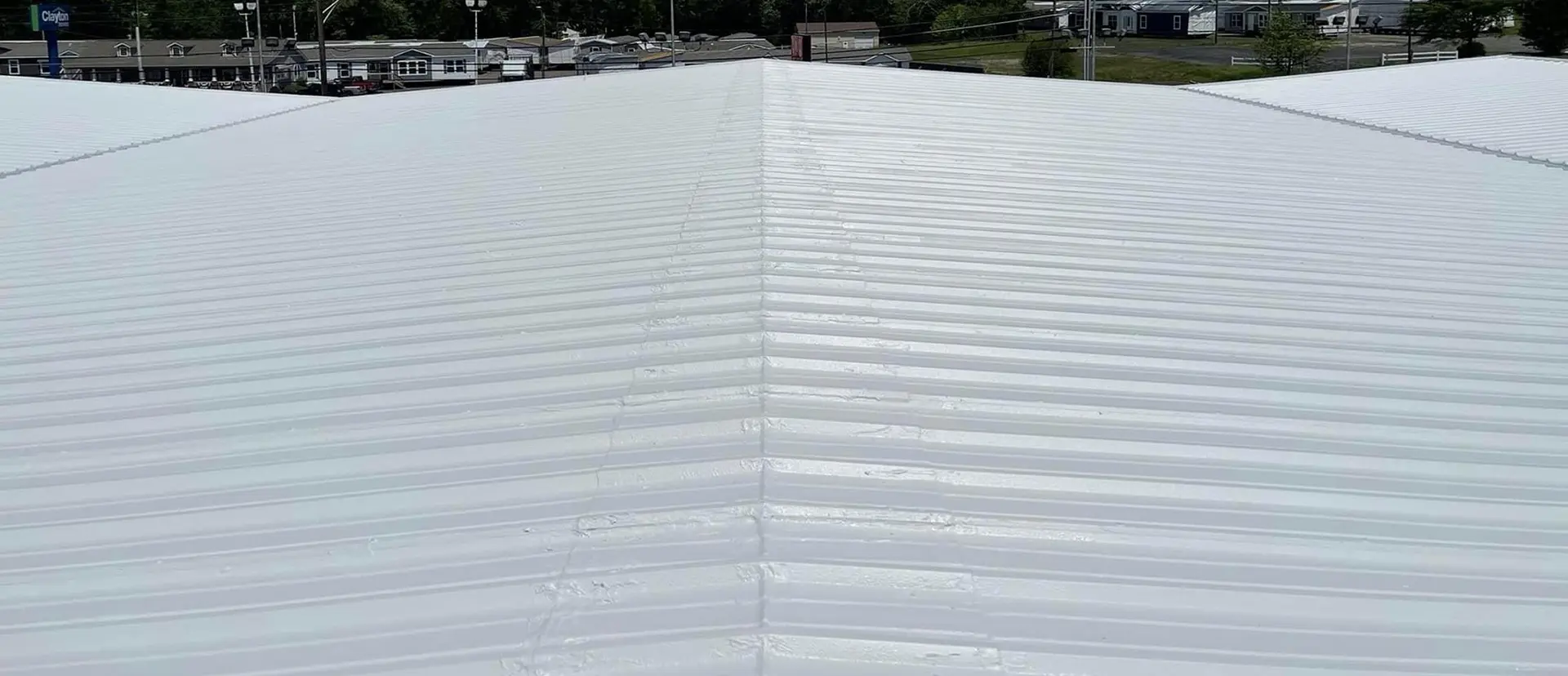
A small drip from the ceiling can look like no big deal. Then the snow melts, the water finds a new path, and suddenly you have stained ceiling tiles, wet stock, or a soft spot on the roof. Flat roofs drain more slowly than steep roofs, so small problems can grow quietly.
Flat roof repair in Mandan, ND starts with finding where the water gets in and choosing a repair that matches the roof. This guide explains what can be repaired, how common repairs are made, and what to check when the work is done. For related information, see our guide to flat roof repair in Watford City, ND.
What Problems Does Flat Roof Repair Fix?
Many flat roof leaks start in a few common places. Here are defects that may call for repair:
- Open or loose seams. The spots where two roof sheets join can pull apart over time, especially after repeated freezing and thawing.
- Punctures and tears. Hail, falling branches, dropped tools, and foot traffic around HVAC units can damage the roof surface.
- Blisters and bubbles. Trapped air or moisture can lift a roofing layer and form bubbles that may later crack open.
- Cracks and shrinking. Some older membranes can become brittle, shrink, or pull away from edges and walls.
- Failed flashing. The metal or membrane pieces around walls, vents, pipes, and curbs can loosen or deteriorate and let water in.
- Loose edge metal. Wind can lift loose metal at the roof edge, allowing water and wind to get underneath.
- Small areas of wet insulation. If the moisture is limited to one area, the affected insulation can be removed and replaced as part of a localized repair.
Repair Methods That Match Your Roof
A good repair uses materials that work with your roof. Mixing the wrong products can cause a patch to fail early. Common repair methods include:
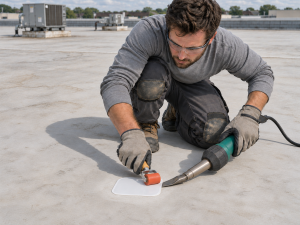
- TPO and PVC roofs: A compatible patch can be heat-welded to a clean, sound membrane that can still accept a weld.
- EPDM (rubber) roofs: The surface is prepared before applying compatible EPDM patch material or seam products.
- Modified bitumen and built-up roofs: Damaged areas can be rebuilt with compatible materials. The repair method depends on the existing roof assembly.
- Coated roofs: Small worn areas on a sound roof may be cleaned and touched up with a compatible coating.
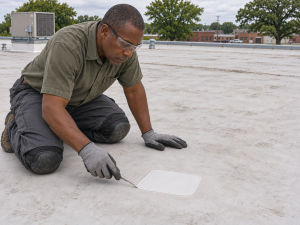
Before patching, the area needs to be clean and dry. Dirt, loose granules, and failed sealant are removed as appropriate for the repair. A patch is only as good as the surface it bonds to.
Why Drainage and Flashing Matter
Water can get into a flat roof around edges and openings, and poor drainage can keep water sitting over weak spots. Checking drainage and flashing helps show whether a patch will address the cause of the leak.
- Drainage check: Look for debris or damage at drains, scuppers, gutters, and downspouts. If water lingers after rain or snowmelt, check whether an outlet is blocked or the roof has a low spot. In Mandan, standing water can freeze and add stress to vulnerable areas.
- Flashing check: Look around walls, rooftop units, skylights, pipes, and vents for gaps, loose metal, cracked sealant, or flashing that has pulled away. Addressing those defects early can help keep water from reaching the layers below.
Drainage and flashing are worth checking whether you manage a store in Mandan or are looking into flat roof repair in Williston, ND.
When a Small Repair Is Not Enough
A patch works well when the damage is limited and the rest of the roof is sound. A localized repair may not be the best choice when:
- Wet insulation covers a large area of the roof.
- The roof has leaks in several different spots.
- The roof is brittle or cracking across a wide area.
- The same areas keep leaking after repeated repairs.
- The roof deck beneath the insulation is soft or deteriorated.
Depending on the findings, a larger section repair, restoration, or replacement may make more sense. If hidden moisture is suspected, separate testing can help identify areas that need a closer look. Coating may be an option for a sound roof after necessary repairs and removal of wet materials. Compare the options based on the roof’s condition, the amount of work needed, and your budget.
How to Check the Work When It’s Done
A repair isn’t finished just because the patch is down. The final checks should match the roof system and the work performed. Depending on the repair, they may include:
- Seam check: On heat-welded membranes, a seam probe can help find gaps after the weld cools.
- Water test: A controlled water test may help verify a repair when the roof system and site conditions allow it.
- Drain check: Check that nearby outlets are clear and that the repair doesn’t block the drainage path.
- Photos: Before-and-after photos can show what was damaged and what was repaired.
- Cleanup: Confirm that scraps, loose materials, and other debris have been removed from the roof and work area.
- Follow-up: Ask what to watch for after the next heavy rain or snowmelt and who to contact if signs of the leak return.
Why Mandan Roofs Need Quick Repairs
Mandan sees hot summers, cold winters, strong winds, and occasional hail. Snow and ice can linger on flat roofs, and repeated freezing and thawing can widen existing gaps. Fixing a problem early can limit damage to insulation, ceilings, and inventory and reduce the amount of work needed later.
Call Hi-Line for Flat Roof Repair in Mandan, ND
If your roof is leaking, holding water, or showing signs of wear, don’t wait for the next storm. Call Hi-Line Commercial Roofing at (701) 621-0511 to discuss flat roof repair in Mandan, ND, and ask about an inspection.
Frequently Asked Questions
1. How much does flat roof repair cost in Mandan, ND?
The cost depends on the size of the damage, the roof type, and how easy the area is to reach. Small patches generally cost less than large section repairs or jobs where insulation needs to be replaced. Call to discuss your roof and next steps.
2. How do I know if my flat roof needs repair?
Look for ceiling stains, drips, standing water on the roof, bubbles, cracks, or loose edges. A musty smell inside can also be a sign of hidden moisture.
3. Can a flat roof be repaired in winter?
Some repairs can be made in cold weather if site conditions and the materials’ temperature requirements allow. If a permanent repair needs warmer or drier conditions, temporary protection may help limit water entry in the meantime.
4. How long does a flat roof repair last?
A compatible repair can last as long as the surrounding roof when the rest of the system is in good shape. On an older roof, nearby areas may start to wear out before the patch does. Regular inspections help catch those spots early.
5. Should I repair or replace my flat roof?
If the damage is limited and the rest of the roof is in good shape, a repair usually makes sense. If the roof has leaks in several areas or widespread wet insulation, replacement may be the better choice. See When a Small Repair Is Not Enough for more signs.
6. How often should a commercial flat roof be inspected?
Spring and fall are good times for routine inspections. It’s also smart to arrange a check after severe hail, wind, or snowstorms, or when new signs of a leak appear.