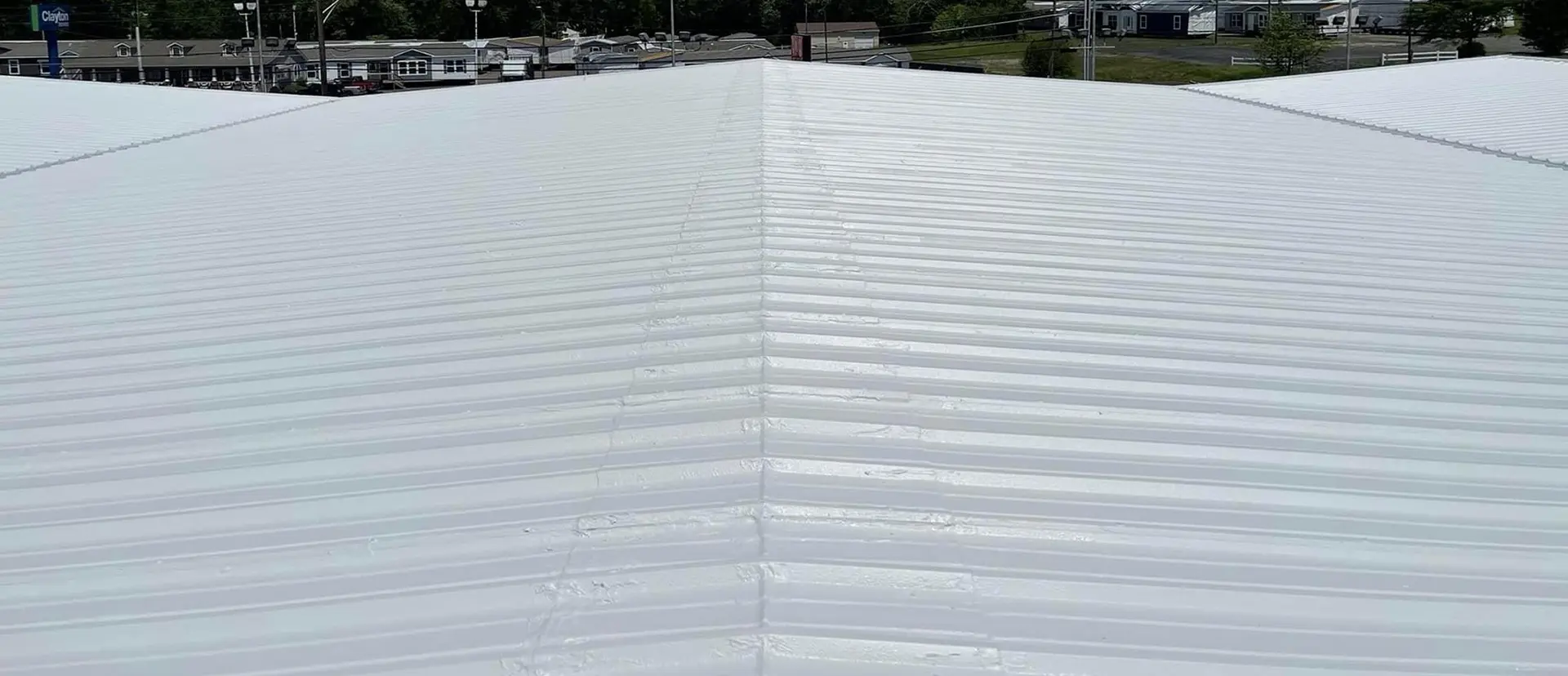
Shops, storage barns, oilfield equipment buildings, and warehouses in Watford City all need a roof that keeps water out. When that roof gets old, a full tear-off can cost a lot of money. Roof restoration in Watford City, ND gives owners another choice: repair and protect the roof they already have so it can last longer.
Restoration often uses a roof coating. If you’re considering roof coating in Watford City, ND, the first question is whether the existing roof is sound enough to keep. Once necessary repairs are made, a liquid coating can cure into a continuous layer that helps protect the roof from sun, snow, and rain.
Call Hi-Line Commercial Roofing at (701) 621-0511 to discuss your Watford City roof and ask about an inspection.
Roof Restoration vs. Roof Replacement
When a commercial roof gets old, restoration and replacement are two options to consider.
A full tear-off removes the old roofing layers down to the deck so damaged areas can be addressed before a new roof is installed. It typically takes more work and creates more waste than restoring a suitable roof.
Roof restoration keeps the existing roof in place. If the roof is still sound and the insulation is dry after any necessary repairs, crews can clean it, prepare the surface, and apply a compatible coating.
For Watford City businesses, avoiding a full tear-off can reduce disruption. Whether the building can stay open depends on the repairs, access needs, and how the work is planned around occupied areas.
Which Roofs Can Be Restored?
Not every roof is a good fit. Start with the roof surface, also called the substrate. A compatible coating system may work on these common roof types:
- Metal roofs: common on shops, barns, and storage buildings
- EPDM: rubber roofing, often black
- TPO and PVC: single-ply membranes, often white
- Modified bitumen: rolled asphalt roofing
- Built-up roofs (BUR): layered asphalt roofing, sometimes surfaced with gravel
- Spray foam roofs: foam roofing with a protective coating that may need renewal
The roof must still be firm and holding together. If it has widespread damage or failing layers, a coating will not fix the underlying problem. Replacement may be the better choice.
Why Moisture Checks Come First
Water can hide in the insulation even when the roof looks dry from above. Coating over wet insulation can trap moisture, damage the deck, and contribute to bubbling or peeling.
Moisture checks may include:
- Infrared scans: A thermal camera shows temperature patterns that may point to wet areas.
- Moisture meters: Readings from suitable equipment help assess suspect areas.
- Core cuts: A small sample lets the inspector examine the roof layers and confirm conditions at that spot.
Wet insulation should be removed and replaced before coating. If moisture is widespread, the roof may need more work than restoration can provide.
Repairs Before the Coating Goes On
A coating is not a patch for big problems. Damaged spots must be fixed first. Before coating, crews may need to:
- Replace wet or crushed insulation
- Fix blisters, splits, and open seams
- Repair or replace loose flashing around walls, curbs, and vents
- Secure loose fasteners or replace corroded ones on metal roofs
- Clear clogged drains and gutters
- Address low spots or other drainage problems
Some roofs need more than prep work. If your roof has leaks, soft spots, or ponding water, it may need flat roof repair in Watford City, ND before a coating can go on. Good repairs give the coating a sound surface to bond to.
How to Prepare the Roof
A coating can only last if it sticks well. The prep steps depend on the roof surface and the coating system. They may include:
- Washing the roof to remove dirt, chalky film, and loose material
- Cleaning and treating rust on metal roofs
- Letting the roof dry fully before coating
- Testing adhesion on a small area to check how well the proposed system bonds
- Applying a compatible primer where the system requires it
A dirty, damp, or poorly prepared surface can cause a coating to peel or fail early.
How the Coating System Is Applied
Once the roof is clean, dry, and repaired, the coating goes on according to the manufacturer’s instructions. Depending on the system, the work may include:
- Seams and transitions: Reinforcing fabric or seam sealer may be used at seams, edges, flashing, and roof openings.
- Base coat: Where specified, the first coat is sprayed or rolled across the roof.
- Top coat: Where specified, another coat builds thickness and adds protection.
- Thickness checks: Coating thickness is measured in mils, or thousandths of an inch. The system specifies how much coating is needed for performance and any applicable warranty.
- Final walk-through: Check for missed spots, review the coating around seams and openings, and confirm that drainage outlets are clear.
Coatings need dry surfaces and temperatures within the manufacturer’s range during application and curing. In Watford City, late spring through early fall often offers better conditions, but the weather forecast and roof conditions matter more than the calendar.
Acrylic vs. Silicone Coatings
Acrylic coatings often come in reflective white and can be a lower-cost choice for roofs that drain well. Prolonged standing water can wear down coatings that aren’t rated for it.
Some silicone coatings are rated for ponding water and perform well in strong sun. A coating that tolerates standing water does not correct a blocked drain or a low spot, so check what is causing the water to collect.
The roof type also matters. Some coating systems need a specific primer to bond to EPDM, TPO, or prepared metal. Choose the coating based on compatibility with the existing roof, how the roof drains, and how the building is used. Check the product instructions and any warranty terms before work begins.
Product Warranty vs. Service Life: What’s the Difference?
A product warranty is written coverage from the coating manufacturer for specific problems over a set period. A roofer may offer a separate workmanship warranty. Read each warranty to see what it covers, what it excludes, and whether it requires a particular coating thickness, inspections, or maintenance.
Service life is how long the coating actually protects the roof. A well-applied and well-maintained coating may outlast its warranty. Heavy foot traffic, poor drainage, or neglected maintenance can shorten its life.
In Watford City, snow, strong wind, and repeated freezing and thawing can stress the roof. Regular inspections help catch wear at seams, flashing, and drains before it spreads.
Long-Term Value of Roof Restoration
When a coating starts to wear thin, a sound roof can often be cleaned, repaired as needed, and recoated with a compatible product. That can extend protection without a full tear-off.
Restoration can help owners budget for roof work over time and reduce the amount of roofing sent to a landfill. Its value depends on how much repair the roof needs now and whether the existing assembly is sound enough to keep.
Get Roof Restoration in Watford City, ND
The right choice depends on your roof’s condition. A professional inspection can identify visible problems and help determine whether moisture testing is needed before choosing restoration or replacement.
For roof restoration in Watford City, ND, call Hi-Line Commercial Roofing at (701) 621-0511 to discuss your roof and ask about an assessment.
FAQs
1. What is roof restoration?
Roof restoration keeps a suitable existing roof in place. Crews clean it, make repairs, and apply a compatible liquid coating that cures into a continuous protective layer.
2. How do I know if my roof can be restored?
Your roof may be a good fit if the deck and roofing layers are sound, damage is limited, and the insulation is dry after any necessary repairs. An inspection helps determine whether hidden moisture testing is needed. If damage or moisture is widespread, replacement may be the better option.
3. What types of roofs can be coated?
Suitable metal, EPDM, TPO, PVC, modified bitumen, built-up, and spray foam roofs can often be coated. Each roof needs a coating system and preparation method compatible with its surface and condition.
4. Why is a moisture check needed before restoration?
Water can hide inside the roof. Coating over wet insulation can trap moisture and contribute to deck damage, blistering, or peeling. Moisture checks help identify areas that may need confirmation and repair before coating.
5. Is a roof coating warranty the same as how long it lasts?
No. A warranty covers specified problems for a set time under written terms. Service life is how long the coating actually protects the roof. Application quality, drainage, foot traffic, and maintenance all affect how long it lasts.
6. Can a restored roof be coated again later?
Yes, if the roof beneath the coating is still sound. Once the surface is cleaned and any necessary repairs are made, a compatible recoat can extend protection without a full replacement.