Commercial roofs in Sidney, MT, face cold winters, strong winds, snow, and hot summer sun. Those conditions put pressure on roofing panels, seams, fasteners, and flashing year after year.
A standing seam metal roof can handle that weather when it is designed and installed correctly. The panels, clips, underlayment, and flashing all have to work as one system. For related information, see our guide to standing seam metal roofing in Watford City, ND. Below, we explain each part in plain words so you know what you’re paying for.
Call Hi-Line Commercial Roofing at (701) 621-0511 to discuss a standing seam metal roof for your building in Sidney, MT.
What Is a Standing Seam Metal Roof?
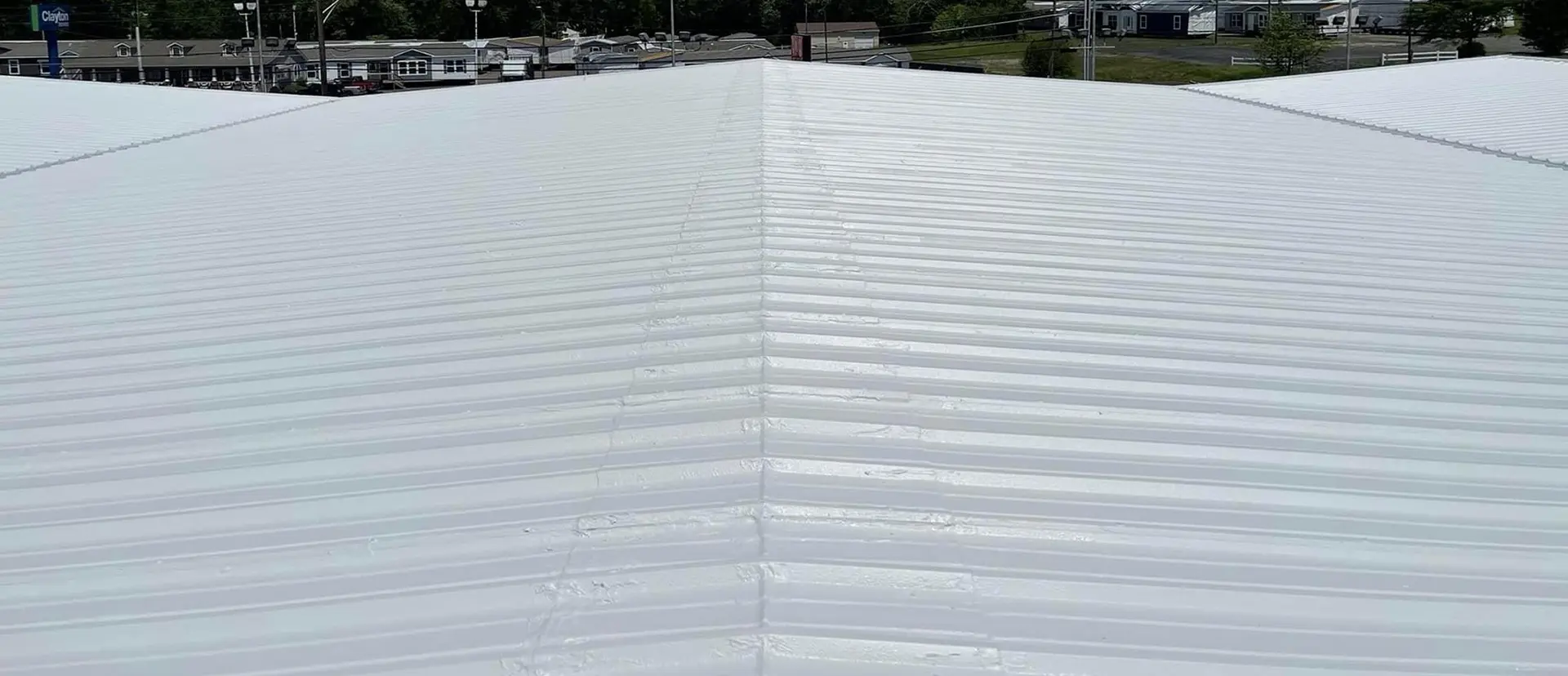
A standing seam roof is made of long metal panels that typically run from the bottom edge of the roof (the eave) toward the top (the ridge). Where two panels meet, their edges lock together in a raised seam. The seams stand above the flat part of the panel. That is where the name comes from.
Steel with a factory-applied finish is a common choice for commercial panels. Panel widths and seam heights vary by system.
There are two common ways the seams join:
- Snap-lock seams click together during installation. They are generally suited to steeper slopes than systems designed for very low slopes.
- Mechanically seamed panels are folded shut with a seaming tool. Depending on the panel design, the seam may have a single or double fold. Some of these systems are designed for lower-slope commercial roofs.
The minimum slope depends on the specific panel system. Check the manufacturer’s data sheet before choosing a panel for your roof.
How the Panels Attach: Concealed Clips
In a clip-fastened standing seam system, the screws that hold down the panels are hidden. Small metal clips are fastened to the deck or framing. The panels engage the clips, and the raised seams cover them. The main panel surfaces don’t need rows of exposed screws, although some trim and flashing details may still use visible fasteners.
Clips and attachment details serve different purposes:
- Fixed clips or fixed points anchor the panel at a designated location to control where it moves.
- Floating (sliding) clips hold the panel down while allowing it to move along its length as the metal heats up and cools down.
Clip spacing depends on the tested roof assembly and the building’s design requirements. Roof edges and corners can face higher wind forces than the middle of the roof, so those areas may need closer clip spacing.
Concealed vs. Exposed Fasteners
Many metal buildings use exposed fastener panels. Screws pass straight through the face of the metal, and a sealing washer helps keep water out of each hole.
Exposed fastener roofs often cost less up front, but they have details that need regular attention:
- Every exposed screw creates a hole through the panel.
- Sealing washers can deteriorate with weather exposure.
- Repeated movement can loosen fasteners or enlarge the holes around them.
- Worn or loose fasteners may need replacement.
With concealed clips, the screws that attach the clips sit beneath the panels, out of direct weather. A system designed to let panels move can also reduce stress on those connections. With fewer exposed fasteners across the roof, there are fewer washers to maintain. For a nearby comparison, see our guide to standing seam metal roofing in Williston, ND.
Exposed fastener panels still have their place. For buildings such as pole barns, storage sheds, and equipment shelters, they can be a sensible choice. The right pick depends on how the building is used, the budget, and how long you plan to keep it.
Underlayment: The Layer You Don’t See
On systems installed over a solid deck, underlayment sits beneath the metal panels. It provides a backup layer of protection if wind-driven rain or snowmelt gets past the panels.
Depending on the roof assembly, options include:
- Self-adhered ice and water membrane: It may be specified at eaves, valleys, and around roof openings, where backed-up water or snowmelt can be a concern.
- High-temperature synthetic underlayment: It can be used where the system calls for an underlayment rated for the heat that can build up beneath metal panels.
Some systems also call for a slip sheet or another separation layer. The right setup depends on the roof assembly and the panel manufacturer’s installation and warranty requirements.
Flashing: Sealing the Edges and Openings
Flashing is the shaped trim that directs water away from places where the roof stops, turns, or has an opening. This includes:
- Eaves and rakes (the bottom and side edges)
- Ridges and hips
- Valleys
- Walls, curbs, vents, and pipes
Good flashing details do two jobs: they shed water and let the panels move where the system needs them to. If flashing pins a panel where it needs to slide, the movement can stress seams and fasteners over time. Compatible closures at panel ends help block wind-driven rain, snow, and debris.
Thermal Movement: Why Panels Need Room to Move
Metal roofing expands as it heats up and contracts as it cools down. In Sidney, winter cold and summer sun can create large temperature swings at the panel surface. The longer the panel, the more room it may need to move. The amount depends on the metal, the panel length, and the temperature range.
Standing seam systems can handle this movement with floating clips, slotted connections, and flashing designed to let panels slide. The manufacturer specifies where to anchor the panel and how much travel the clips allow. Very long runs may need a different clip or an expansion detail. Planning for that movement helps prevent stress at seams, fasteners, and flashing.
Planning Your Standing Seam Metal Roof in Sidney
Whether you manage a shop, warehouse, farm building, or office, ask how the proposed roof will handle wind, snow, and temperature changes. A clear proposal should identify the panel system, attachment, underlayment where applicable, flashing details, and how the panels will move. Review any warranty terms separately so you know what is covered and what is required to maintain coverage.
For a standing seam metal roof in Sidney, MT, call Hi-Line Commercial Roofing at (701) 621-0511 to discuss your building and project options.
FAQs
1. How long does a standing seam metal roof last in Sidney, MT?
A properly installed and maintained standing seam metal roof can last for several decades. Its service life depends on the metal, coating, installation quality, maintenance, and exposure to local weather.
2. Is a standing seam metal roof worth the cost?
It often costs more up front than exposed fastener metal. Concealed clips reduce the number of exposed screws and washers that need maintenance. Whether that offsets the higher price depends on the building, the system, and how long you plan to keep it.
3. Can a standing seam roof handle heavy snow?
Yes, when the roof assembly and supporting structure are designed for the applicable snow loads. If sliding snow is a concern near entrances or walkways, include snow retention in the roof design.
4. What is the difference between snap-lock and mechanically seamed panels?
Snap-lock panels click together during installation. Mechanically seamed panels are folded shut with a tool. Some mechanically seamed systems are designed for lower slopes, but the panel manufacturer sets the minimum slope.
5. Can a standing seam metal roof go on a low-slope commercial building?
Yes, if the specific panel system is rated for the building’s roof slope. Some mechanically seamed systems are designed for low slopes. Check the manufacturer’s minimum slope and installation details before choosing a panel.
6. Do standing seam metal roofs leak?
They can. Poorly detailed flashing, damaged seams, or connections that restrict panel movement can let water in. Correct system selection, installation, and maintenance help reduce that risk.