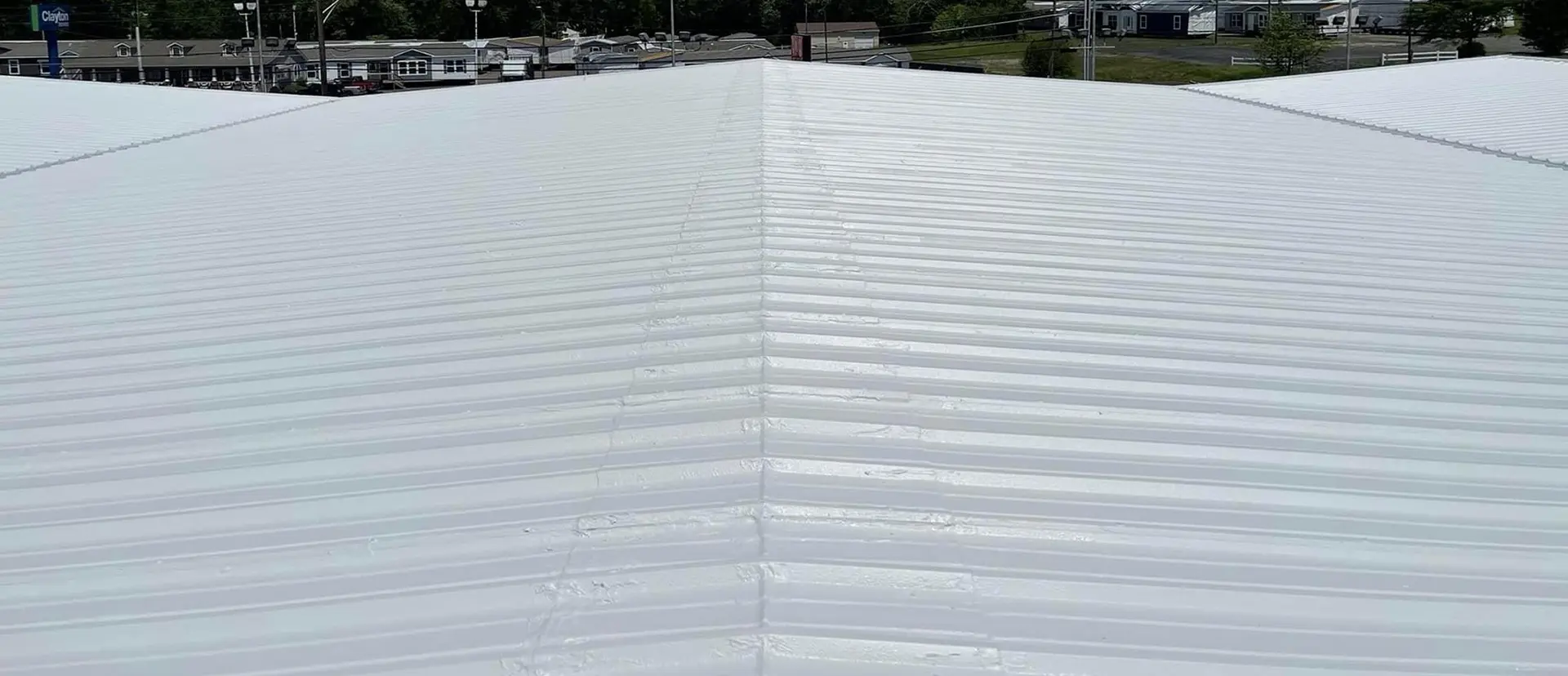

A commercial roof in Minot faces snow, strong prairie winds, and repeated temperature changes. Snow adds weight, wind stresses seams and edges, and freeze-thaw cycles can worsen existing gaps. Building owners can make better long-term decisions by working with a commercial roofing contractor who understands the building, documents findings, and recommends appropriate maintenance or repairs.
Hi-Line Commercial Roofing works as a commercial roofing contractor in Minot, ND. This guide covers what the work involves, so you know what to ask before a project starts.
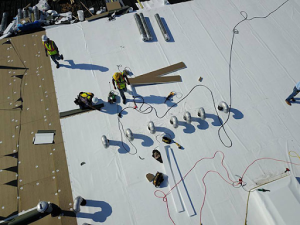
Material-Specific Work on Minot Commercial Roofs
Each roof system calls for different materials, preparation, and application conditions. Here are important considerations for single-ply, spray foam, reinforced coating, and metal restoration projects.
Single-Ply Membranes (TPO, PVC, EPDM)
Single-ply roofing uses membrane sheets installed over a suitable supporting assembly. Membranes may be reinforced or non-reinforced, depending on the product and system. Selection depends on the building:
- TPO: Light-colored products reflect sunlight and may reduce summer cooling demand.
- PVC: Certain products offer resistance to grease, oils, and chemicals, making compatibility important for buildings with rooftop exhaust.
- EPDM: Rubber membranes remain flexible in cold conditions. Wind performance depends on the complete attachment system rather than the membrane alone.
Roof performance comes down to details. TPO and PVC seams are heat-welded, while EPDM uses compatible seam materials specified for the system. Insulation and cover boards need proper securement, and curbs, drains, and penetrations need appropriate flashing. Seams and flashing are common leak locations. Service life depends on product selection, installation, exposure, drainage, and maintenance.
Spray Foam Roofing
Spray polyurethane foam (SPF) roofing is formed by mixing liquid components that expand and cure into a continuous layer. A compatible protective coating shields the foam from sunlight and weather exposure.
Foam can conform to irregular roof shapes, but penetrations and transitions still require proper detailing. Roofing-grade closed-cell SPF provides substantial insulation; the specified product’s published thermal performance determines its R-value.
Some suitable existing metal, concrete, or membrane assemblies can receive SPF without full tear-off. Compatibility, attachment, moisture condition, structural capacity, and applicable requirements must be evaluated first. When the protective coating wears, recoating may extend service life if the foam and underlying assembly remain sound.
Fabric Reinforced Systems
A fabric reinforced coating system can restore suitable roofs that have repairable deterioration. Depending on the specified system, reinforcing fabric is embedded in coating and covered with additional material to form a continuous protective surface.
Systems are available for various substrates, but compatibility with existing TPO, EPDM, built-up, modified bitumen, or other surfaces must be confirmed. Necessary repairs, moisture assessment, cleaning, primer, and application conditions depend on the selected product.
In Minot, coating work needs weather conditions that meet the manufacturer’s temperature, moisture, and curing requirements.
Metal Roof Restoration
Metal roofs on shops, warehouses, and agricultural buildings can develop leaks at fasteners, seams, and flashing while much of the panel surface remains serviceable. Depending on the roof and selected restoration system, work may include:
- Inspecting the roof and cleaning it using suitable methods.
- Correcting damaged panels, fasteners, seams, and flashing.
- Preparing corrosion and applying primer where specified.
- Installing compatible seam treatments, reinforcement, and protective coating.
- Checking application coverage and details against the specified system requirements.
Restoration can extend the service life of a suitable metal roof, but the result depends on its condition, preparation, materials, installation, and maintenance. Warranty duration, coverage, and any renewal options depend on the written terms for the selected system.
Spray Foam Insulation
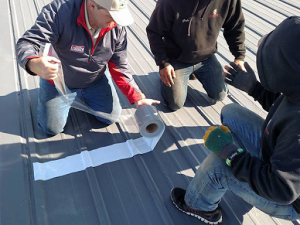
Roofing and insulation are closely connected during Minot winters. Building owners considering spray foam insulation in Minot, ND should evaluate how it fits the building’s thermal, air, and moisture-control design.
Properly selected and installed spray foam can reduce heat transfer and air leakage. Condensation control depends on the full assembly, including indoor humidity, ventilation, vapor control, and material placement. Interior insulation applications and exterior SPF roofing are different uses and should not be treated as interchangeable.
Retrofit suitability depends on the substrate, existing materials, access, and the product’s installation and protective-covering requirements.
Repair, Restore, or Replace: How the Decision Gets Made
The decision should be based on the roof’s observed condition and any additional investigation needed:
- Repair: Often appropriate for isolated punctures, open seams, failed flashing, or fastener problems on an otherwise sound roof.
- Restoration: May suit roofs with repairable surface deterioration, sound supporting materials, and conditions compatible with the proposed system.
- Replacement: May be appropriate for widespread deterioration, extensive wet insulation, structural damage, or recurring problems that repairs cannot reasonably address.
Moisture is an important factor, along with age, structural condition, and the extent of damage. Infrared scans and suitable moisture surveys can identify suspect areas, but findings may need confirmation through sampling or other investigation. Coating does not correct wet insulation or damaged underlying materials.
If replacement is the appropriate option, our flat roof replacement Minot, ND guide covers that process in more detail.
Project Coordination on an Occupied Building
Commercial roofing work may be possible while a building remains occupied, depending on the work and site conditions. Before the project starts, the scope should address:
- Access and staging: Material and equipment locations, delivery arrangements, and affected entrances or parking areas.
- Rooftop equipment: Coordination around HVAC units, penetrations, and any work requiring a mechanical contractor.
- Odor, noise, and overspray: Controls suited to the materials, nearby air intakes, occupants, and surrounding property.
- Weather windows: Application limits and arrangements for weather delays.
- Tear-off phasing: How opened areas will be protected and made watertight as work progresses.
Documented Completion Checks
Before closeout, confirm which checks and records are included in the project scope:
- Seam and flashing review appropriate to the roof system, including curbs, drains, and penetrations
- Coating coverage and thickness checks required by the selected system
- Before-and-after photos where specified
- Material records identifying the installed system
- Any applicable warranty documents and maintenance requirements
- A list of incomplete, deferred, or monitored items
These records establish a useful baseline for future inspections and maintenance planning.
Minot Weather and Ongoing Roof Care
Snow loads, wind, and freeze-thaw cycles create important maintenance concerns. Snow accumulation adds weight and can obstruct drainage. Wind can damage edges and flashing. Water entering defective details can contribute to further deterioration during freezing conditions.
Seasonal inspections, along with assessments after severe weather or concerning snow accumulation, help identify problems. Clearing drainage, repairing defects, and maintaining protective coatings can help preserve service life.
The same maintenance principles apply to commercial roof maintenance in Devils Lake, ND, with the schedule and tasks adjusted to each building.
Schedule a Roof Evaluation in Minot
If your roof is leaking, showing wear, or has not been assessed recently, contact Hi-Line Commercial Roofing to discuss an evaluation. Establish the inspection scope, documentation, and any separate testing needed to compare repair, restoration, or replacement options.
Call 701-621-0511 to discuss your commercial roof in Minot.
Frequently Asked Questions
1. How long does a commercial roof last in North Dakota?
Service life varies by system, installation, weather exposure, drainage, and maintenance. Some commercial roofs provide decades of service. Suitable coated and SPF roofs may have their useful life extended through repairs and recoating, but no fixed lifespan applies to every roof.
2. Should I repair, restore, or replace my commercial roof?
Repair often fits localized damage. Restoration may fit a sound roof with repairable deterioration and a compatible substrate. Extensive moisture, structural problems, or widespread failure may favor replacement. Inspection and any necessary testing help establish the appropriate scope.
3. Can a new commercial roof go over the existing one?
Sometimes. Suitability depends on existing layers, moisture, structural capacity, attachment, compatibility, and applicable requirements. SPF and reinforced coating systems are options only where approved for the specific assembly. Wet or damaged materials must be addressed first.
4. Can commercial roofing work be done during a Minot winter?
Some repairs may be possible when conditions are safe and meet product requirements. Other work, including certain coatings, adhesives, and SPF applications, needs suitable temperatures and moisture conditions. Temporary protection may be necessary until permanent work can proceed.
5. How often should a commercial roof be inspected?
Spring and fall inspections are a useful baseline, with additional checks after severe weather or potentially damaging rooftop work. Follow manufacturer requirements and adjust the frequency to the roof’s condition and exposure.
6. Does spray foam insulation help with a commercial roof?
It can improve thermal performance and reduce air leakage when correctly selected and installed. R-value depends on the specific product and thickness. Condensation control requires assessment of the complete assembly, and interior insulation should be distinguished from exterior SPF roofing.