After the snow melts, commercial building owners in Mandan may find open seams, ponding near drains, or rust around metal roof fasteners. A full replacement can be costly and disruptive, so many owners want to know whether a coating can extend the life of their existing roof. The same question comes up when evaluating commercial roof coating in Rugby, ND.
Sometimes it can, and sometimes it cannot. Roof coating in Mandan, ND works best on a suitable roof, over a properly prepared substrate, after necessary repairs. This guide explains what to check before approving a project. To discuss your roof, call Hi-Line Commercial Roofing at 701-621-0511.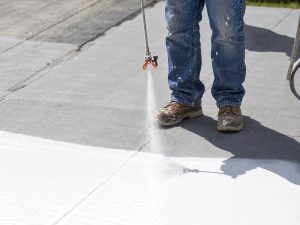
What Is a Commercial Roof Coating?
A commercial roof coating is a fluid-applied material that cures into a continuous protective layer over a compatible existing roof. Depending on the system, it can protect repaired seams and fasteners and provide a reflective surface. A suitable restoration project may avoid a full tear-off, although damaged roofing or wet insulation may still need removal.
Common coating options include:
- Silicone: Many products resist prolonged standing water and UV exposure. The selected product must be approved for the roof and its conditions.
- Acrylic: A water-based, reflective option commonly used on roofs with good drainage. Many acrylic products are not intended for prolonged ponding water.
- Urethane: Available in aromatic and aliphatic formulations, with properties that vary by product. Some systems use urethane for added durability in areas exposed to traffic or impact.
Spray polyurethane foam, or SPF, is a separate roofing system that also uses a protective coating. The foam adds insulation, while its coating protects it from sunlight and weather.
Coatings can extend the service life of a suitable existing roof. They do not correct structural failure or eliminate the need for underlying repairs.
Which Roofs in Mandan Are Good Candidates for a Coating?
Many low-slope commercial roofs may be suitable when the existing roofing is stable, moisture problems have been addressed, the deck is sound, and the selected coating is compatible with the substrate.
Metal Roofs
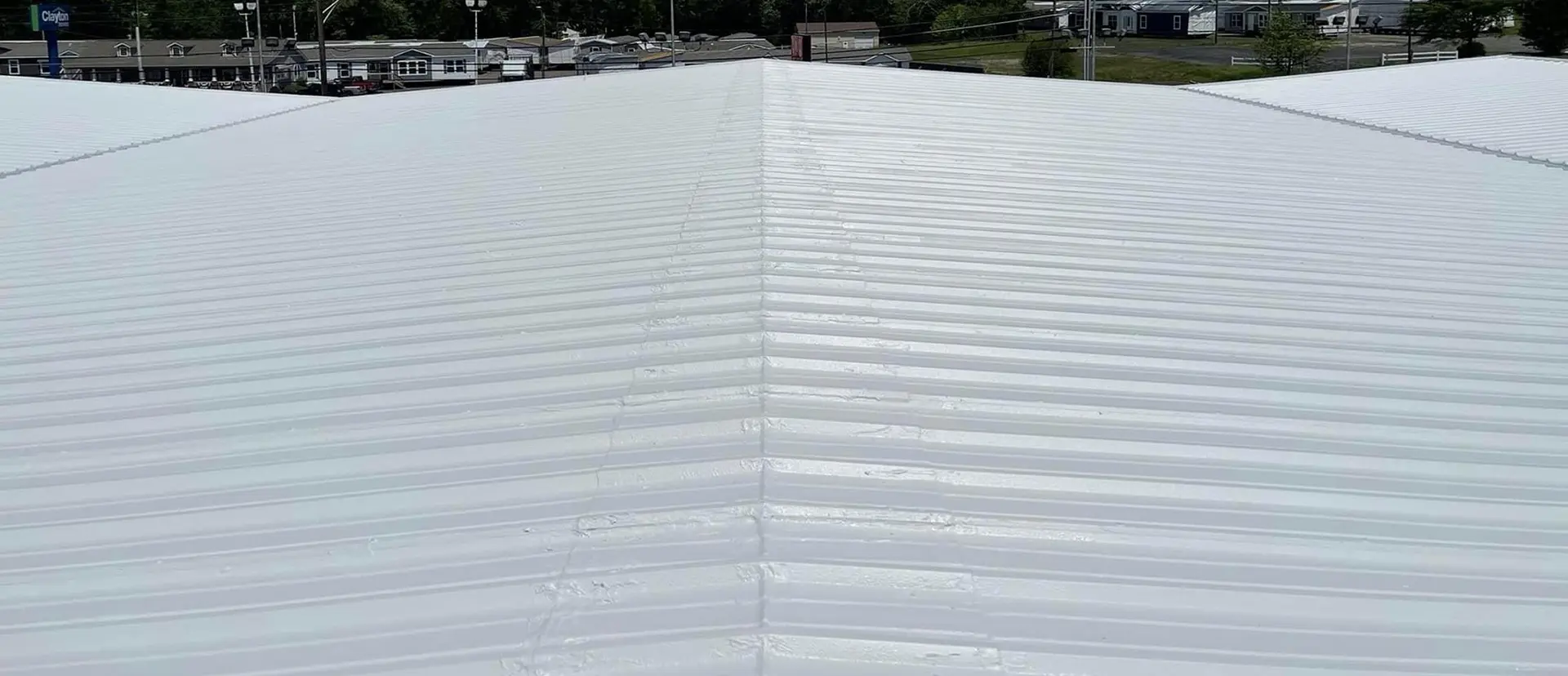
Metal roofs can be good candidates for restoration. Exposed-fastener roofs on warehouses, shops, and agricultural buildings may develop leaks at screws and panel laps while much of the metal remains serviceable. After appropriate rust treatment, fastener repairs, and seam detailing, a compatible coating can help protect the existing roof.
Single-Ply Roofs: TPO, PVC, and EPDM
Some TPO, PVC, and EPDM roofs can be coated with an approved system. Cleaning, primer requirements, and adhesion testing depend on the membrane and coating manufacturer. Widespread cracking, shrinkage, or poor attachment may make restoration unsuitable without more extensive work.
Modified Bitumen and Built-Up Roofs
Modified bitumen and built-up roofs may be suitable after repairs and surface preparation. Loose granules or gravel require special attention, and some gravel-surfaced roofs may not be practical coating candidates. Asphalt-based surfaces may also need a bleed-blocking primer or base coat.
Spray Polyurethane Foam
Foam roofs depend on a protective coating. If the foam remains sound and dry, repairs and a compatible maintenance recoat can restore that protection. Damaged or wet foam must be addressed first.
When a Coating Is the Wrong Call
Widespread wet insulation, severe deck deterioration, unstable roofing, or structural sagging can make a coating inappropriate. Those conditions require further evaluation and may call for sectional replacement, structural repairs, or a new roof.
Why Moisture Checks Come Before Anything Else
Wet insulation should not simply be covered with a new coating. Hidden moisture can reduce insulation performance and contribute to deterioration of the roof assembly. The extent and source of moisture need to be understood before restoration is recommended.
Depending on the roofing assembly and inspection findings, assessment methods may include:
- Infrared scans: Thermal patterns can help identify areas of suspected moisture under suitable conditions. Findings generally need verification.
- Capacitance or impedance surveys: Suitable equipment can help identify areas with readings that suggest elevated moisture. Roof construction affects how readings are interpreted.
- Core cuts: Small samples reveal roof layers and material condition at specific locations. Sample openings need a compatible watertight repair.
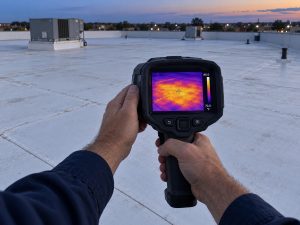
Testing requirements and warranty eligibility vary by manufacturer and system. Identified wet or damaged materials should be removed or otherwise addressed as required before coating. Ask your contractor how the roof will be assessed and how suspected moisture will be confirmed.
These checks also matter when evaluating roof coating in Watford City, ND, where winter exposure and spring snowmelt can reveal existing weaknesses.
Repairs That Must Happen First
A coating should follow necessary repairs. Depending on the roof, that work may include:
- Replacing wet insulation and repairing the affected roofing
- Re-securing loose seams and lap joints
- Replacing damaged or loose fasteners with appropriate compatible components
- Repairing flashing at walls, curbs, and penetrations
- Repairing sealant pockets and drain details
- Treating rust and applying primer where the selected system requires it
- Addressing recurring ponding through appropriate drainage improvements
The repair scope should be included in the proposal. Leaving these problems unresolved can shorten the coating system’s service life.
How Surface Preparation Works
Coatings bond to the surface directly beneath them. Dirt, oxidation, loose material, and incompatible previous coatings can interfere with adhesion. Preparation typically includes:
- Clean the roof: Use methods and pressure suitable for the existing roofing without damaging membranes, seams, or flashing.
- Use compatible cleaners: Follow the selected system’s requirements for the substrate.
- Allow the surface to dry: Meet the product’s surface-moisture and application requirements.
- Check adhesion: Complete test patches or adhesion testing where required to establish compatibility and preparation needs.
- Apply primer where required: Use the primer specified for the substrate and coating system.
How the Coating System Is Applied
Once the roof is repaired, clean, and dry, application follows the selected manufacturer’s instructions. A system may include:
- Detail work: Seams, fasteners, flashings, and penetrations receive compatible sealants or reinforced coating details where specified.
- Base coat: Applied where required at the specified coverage rate.
- Top coat: Applied within the required recoat window. Some systems use contrasting coats to help identify incomplete coverage.
- Thickness checks: Application rates and film thickness are checked using methods appropriate for the product and substrate.
Some products use a different application sequence or a single-coat approach. Required thickness, surface preparation, installation details, and other conditions all affect system performance and warranty eligibility.
When Can You Coat a Roof in Mandan?
Weather conditions affect application and curing. Each product has requirements for temperature, surface moisture, humidity, dew point, and rain exposure. Those requirements must be met throughout the relevant application and curing period.
Late spring through early fall often offers more suitable opportunities in Mandan, but the calendar alone does not determine whether conditions are acceptable. Plan early enough to allow for repairs, drying time, and weather delays.
Product Warranty vs. Expected Service Life: They Are Not the Same
A warranty describes coverage under specific written terms. Expected service life describes how long the installed roof system may remain serviceable. They are different measures.
Warranty options may include:
- Material-only coverage: Coverage for specified product defects, subject to the warranty’s limits and remedies.
- Labor and material coverage: Coverage that may include eligible repair labor as well as materials.
- System warranties: Some manufacturers offer broader system coverage, including certain no-dollar-limit warranties. These still have terms, exclusions, and eligibility requirements.
Requirements may include approved substrates, specified coating thickness, documented repairs, inspections, and ongoing maintenance. Review provisions involving hail, foot traffic, building movement, ponding water, and other potential sources of damage.
Actual service life depends on the existing roof, repairs, preparation, coating thickness, drainage, weather exposure, and maintenance. A coating may remain serviceable beyond its warranty period, while an unsuitable or poorly prepared roof may develop problems much sooner.
A compatible maintenance recoat may extend service life when the roof remains suitable. It does not automatically renew a warranty.
When comparing proposals, ask:
- What coating system and thickness are specified?
- Who issues the warranty?
- Does coverage include labor?
- What inspections and maintenance are required?
- Which exclusions apply?
Get a Roof Coating Assessment in Mandan
A coating can be a practical option when the existing roof is suitable and the work includes necessary repairs and preparation. An assessment should establish the roof’s condition, whether further moisture testing is needed, and which restoration options are appropriate.
If you are considering roof coating in Mandan, ND, call Hi-Line Commercial Roofing at 701-621-0511 to discuss your roof and the next steps for evaluation.
Frequently Asked Questions
How long does a commercial roof coating last in North Dakota?
Service life varies by coating system, thickness, roof condition, preparation, weather exposure, and maintenance. Ask for an estimate based on the proposed system rather than assuming the warranty period equals its lifespan. A suitable roof may be eligible for a maintenance recoat.
Is a roof coating cheaper than a roof replacement?
It often costs less when the existing roof is a suitable restoration candidate. Savings depend on the repairs, preparation, and materials required. Compare complete project scopes, including any wet insulation removal or drainage improvements.
Can you put a roof coating over a leaking roof?
A roof with repairable leaks may be a candidate after the leak sources and any wet or damaged materials are addressed. Coating over unresolved leaks or wet insulation can leave the underlying problems in place.
What is the best roof coating for a flat roof in Mandan?
The choice depends on the substrate, roof condition, drainage, exposure, and manufacturer’s requirements. Some silicone products are approved for ponding conditions, while acrylic systems commonly require good drainage. Recurring drainage problems still deserve attention.
Does a roof coating help with energy bills?
Reflective coatings can lower roof-surface temperatures and may reduce summer cooling demand. Actual savings depend on insulation, HVAC efficiency, building use, and local weather.
What time of year is best for roof coating in North Dakota?
Late spring through early fall often provides suitable conditions. The actual installation window depends on the selected product’s temperature, moisture, and curing requirements, along with the weather forecast.