A commercial roof in Devils Lake faces drifted snow, repeated freeze-thaw cycles, and strong prairie winds. Problems often begin at one small detail: a clogged drain, a partially open seam, or a split pipe boot. Water can enter before anyone sees a ceiling stain.
That is why commercial roof maintenance in Devils Lake, ND, works best as specific checks on a schedule. This guide covers what to check on each roof type, how to address drains, seams, and flashings, what records to keep, and when to schedule the work. To discuss maintenance for your roof system, contact Hi-Line Commercial Roofing at 701-621-0511.
What a Commercial Roof Maintenance Visit Should Include
A maintenance visit needs a defined scope. A brief visual check alone may not provide enough information to assess every concern. The agreed service should identify inspections, cleaning, any authorized repairs, documentation, and follow-up work.
Items to address include:
- Debris removal, including loose fasteners and scraps left after rooftop service work
- Drains, scuppers, and gutters, checked for obstruction and drainage problems
- The roof field, checked for punctures, blisters, splits, and wear
- Seams, laps, and flashing at walls, curbs, pipes, and edges
- Sealants at pitch pans, termination bars, and counterflashing
- Minor repairs where authorized and conditions allow
- Written findings, photos, location references, and follow-up items as specified in the service agreement
Interior observations can help guide the inspection. Ceiling stains and visible deck deterioration may indicate areas requiring investigation, although the entry point can be elsewhere. If your building has never had a baseline assessment, begin with a commercial roof inspection in Devils Lake and build the maintenance scope from its findings.
Maintenance by Roof Type
Each system wears differently, so maintenance should match the roof on your building. Rooftop checks and repairs require trained personnel with suitable access and fall protection.
Spray Foam (SPF) Roofs
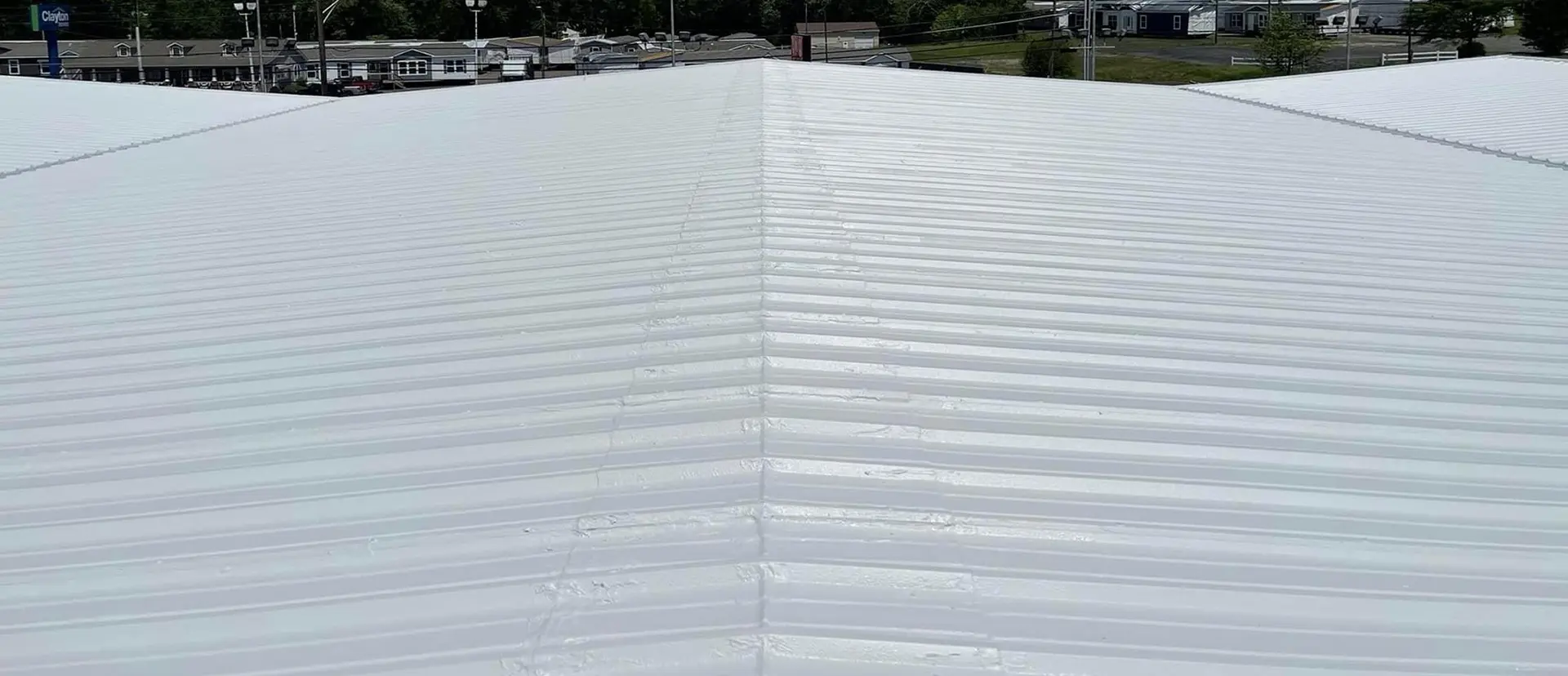
The foam provides insulation and forms part of the waterproofing system, while its protective coating shields it from sunlight and weather. Inspect traffic paths and exposed areas for coating wear. Bare foam can discolor and deteriorate, requiring assessment and repair before its protective coating is restored.
Punctures, blisters, and bird damage need evaluation to determine the extent of deterioration or moisture. Repairs should use compatible materials and restore the specified coating. Coating condition and appropriate thickness assessments help determine when recoating is needed. For related information, see Hi-Line’s spray foam roofing information.
Metal Roofs
Temperature changes cause metal panels to expand and contract, which can loosen fasteners and wear washers over time. Damaged fasteners and washers need compatible repairs or replacement. Check for corrosion at panel joints, cut edges, and panel bottoms. Inspect ridge caps, trim, pipe boots, gutters, and edge metal for wind, snow, and ice damage.
Widespread corrosion or recurring fastener problems may call for panel repairs, a suitable restoration system, or replacement, depending on the roof’s condition.
Single-Ply Membranes (TPO, EPDM, PVC)
Seams and edges deserve close attention. Inspect TPO and PVC welds using the manufacturer’s maintenance procedures, including probing where appropriate. Examine EPDM seam materials and flashing for lifting or separation. Aging EPDM can shrink and stress base flashing at walls.
Look for punctures around HVAC units and hatches. Compatible walkway pads can protect frequent service routes when installed according to the roofing system’s requirements.
Fabric-Reinforced and Coated Roofs
Examine runoff paths and traffic areas for worn coating, exposed reinforcement, and separation at details. Many acrylic roof coatings are not designed for prolonged ponding. Check the manufacturer’s specifications and address recurring drainage problems before recoating.
When the existing roof remains suitable, compatible recoating can protect the surface and extend useful service life. For related guidance, see our information about commercial roof coating in Devils Lake, ND.
Drains, Scuppers, and Ponding Water
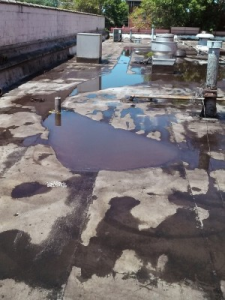
Poor drainage is a significant concern on low-slope roofs. Standing water adds load and can contribute to deterioration. Repeated freezing and thawing can place additional stress on vulnerable details.
A drainage assessment should include:
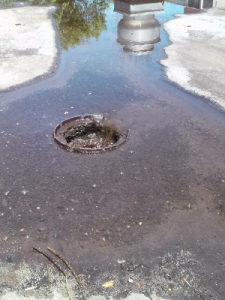
- Removing debris from accessible drain strainers and inlets
- Checking strainer domes and drain assemblies, including clamping-ring fasteners where present
- Evaluating drainage performance and checking flow where appropriate
- Checking scuppers and overflow outlets for obstruction or damage
- Clearing gutters and downspouts before freezing weather
Blocked piping below roof level may need a separate drainage service. Overflow drainage also needs to remain unobstructed; it should not be assumed to work when the primary outlets are blocked by ice.
Water remaining roughly 48 hours after rain warrants investigation, especially when recurring. Record the locations and extent of ponding. Depending on the cause, corrective work may involve drainage changes, tapered insulation, crickets, or repairs to underlying conditions.
Seams and Flashings: Common Commercial Roof Leak Points
Inspect these details for loose connections, failed sealants, open laps, and weather damage:
- Base and wall flashing: Open laps, loose termination bars, cracked sealant, and displaced counterflashing
- Equipment curbs: Damaged flashing, corners, and terminations around all accessible sides
- Pipe boots: Splits, deterioration, loose clamps, and failed seals
- Pitch pans: Deteriorated or separated filler, repaired according to the specified detail rather than simply topped off
- Edge metal and coping: Loose or damaged components that could allow water entry or wind damage
- Expansion joints: Splits, separation, and other deterioration
Exposed sealants need periodic inspection and renewal based on condition and product requirements. Sealant alone is not a substitute for correcting a failed flashing detail. Record repairs so those locations receive attention during future checks.
Keeping Service Records That Actually Help
Good records support maintenance planning and can help document conditions for warranty or insurance purposes. Keep a roof file for each building with:
- System type, installation date, installer, manufacturer, and warranty terms
- A roof plan or location references identifying drains, curbs, penetrations, and past repairs
- Visit reports with dates, findings, photos, repairs, and materials where provided
- Open items with priorities and target dates
- Leak history, including interior locations, timing, and completed repairs
- Records of rooftop work by other trades
Some warranties require documented maintenance. Dated photos can help establish roof condition, but they do not determine insurance coverage by themselves. Follow your specific warranty terms and retain the records supplied under the maintenance agreement.
When to Schedule Maintenance and Follow-Up in Devils Lake
| When | What to Do |
|---|---|
| Spring, often late April to May | Once conditions allow, assess winter damage, seams, edges, drainage, and any snow-removal damage. |
| Fall, often September to early October | Inspect before freezing weather, address defects, and arrange further debris clearing after leaves fall where needed. |
| After severe weather | Arrange a prompt assessment after hail, strong winds, or concerning snow accumulation once access is safe. |
| After rooftop work | Check for debris, cuts, punctures, and disturbed flashing. |
| Winter | Arrange professional assessment of concerning drifts, loading, or blocked drainage; avoid unsafe rooftop access. |
| Monthly, owner or staff | Look from safe locations for interior stains, visible gutter overflow, or other signs requiring professional attention. |
Sort findings by urgency. Active leaks, open seams, and missing flashing need prompt attention. Establish target dates for other repairs based on severity, water-entry risk, weather, and manufacturer requirements rather than using one deadline for every roof.
If the repair list grows each visit, isolated repairs may no longer address the underlying deterioration. Our information about commercial roof repair in Devils Lake, ND discusses when repairs remain appropriate and when coating or replacement may deserve evaluation. A roof must be sound, sufficiently dry, and compatible with a proposed coating system.
Schedule Maintenance with Hi-Line
A maintenance scope for a Devils Lake building should account for the roof system, its condition, and North Dakota’s winter weather. If your roof has not had a recent documented assessment, a baseline inspection can help identify priorities.
Call Hi-Line Commercial Roofing at 701-621-0511 to discuss commercial roof maintenance in Devils Lake, ND, including the proposed tasks, visit schedule, and documentation.
Frequently Asked Questions
How often should a commercial roof be inspected and maintained?
Spring and fall inspections are a useful baseline, with additional assessments after severe weather or potentially damaging rooftop work. Timing should account for the roof’s condition, safe access, and manufacturer requirements.
What does commercial roof maintenance include?
Typical tasks include debris and drainage checks, inspection of the roof surface, seams, and flashing, and identification of repair needs. Cleaning, sealant renewal, repairs, testing, and written documentation should be defined in the agreed scope.
How much does commercial roof maintenance cost?
It depends on roof size, roof type, penetrations, equipment, access, and the work required. Regular assessment can identify developing problems early and reduce the risk of more extensive repairs.
How can regular maintenance extend commercial roof life?
Maintenance helps identify damaged seams, failing flashing, and small punctures before they become larger problems. Timely repairs help limit water entry into insulation and decking. Actual service life depends on the roof system, installation, exposure, maintenance, and repair history.
When should snow be removed from a commercial roof?
The decision depends on snow weight, drifting, roof design, structural capacity, and professional assessment. When removal is necessary, trained personnel should use methods that protect the roof system. Do not rely on snow depth alone to judge loading.
Do commercial roof warranties require maintenance?
Requirements vary by manufacturer and warranty type. Some require documented inspections and maintenance. Keep dated reports, photos, and repair records, and follow the terms for your roof system.