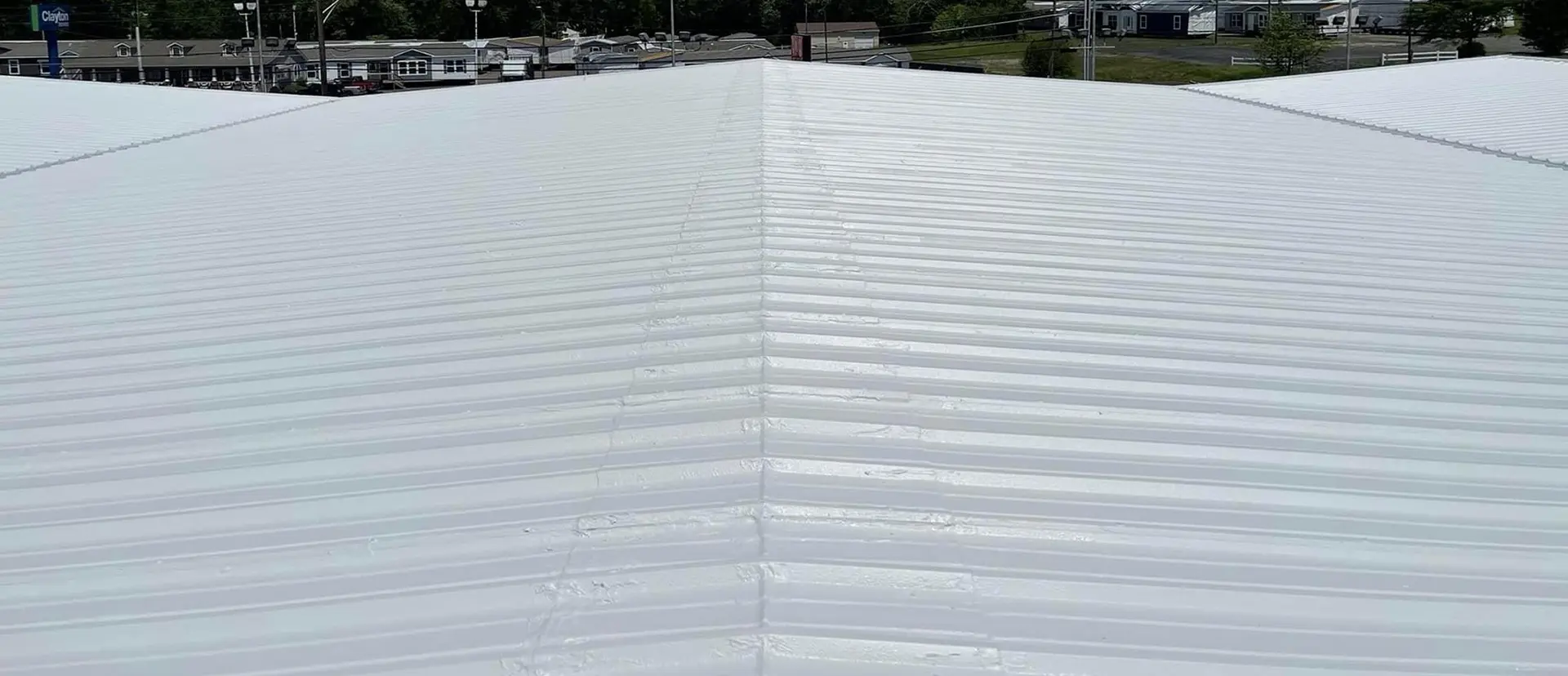

A commercial roof has to do more than keep rain out. In Dickinson, ND, a low-slope roof also has to deal with snow, wind, freezing temperatures, summer heat, and water that can collect when drainage is not working as it should. For many commercial buildings, TPO roofing can be a suitable option when the existing roof assembly, building conditions, and proposed roofing system are appropriate for a single-ply membrane.
TPO, or thermoplastic polyolefin, is a single-ply roofing membrane commonly used on low-slope commercial roofs. But choosing the membrane is only one part of the project. The finished roof depends heavily on how the membrane is attached, how seams are welded, and how penetrations, edges, walls, curbs, and drains are detailed.
The same design considerations apply to TPO Roofing in Watford City, ND and commercial roofing projects in Minot. Wind resistance depends on the complete approved assembly and project-specific requirements, not the membrane alone.
What Is TPO Roofing?
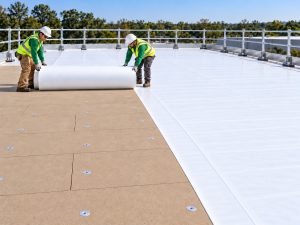
Thermoplastic polyolefin, or TPO, is a single-ply roofing material used on low-slope structures such as commercial buildings. It can be installed as part of a new roof or, where conditions and applicable requirements allow, over a suitable existing roof assembly.
However, the TPO membrane alone does not comprise the total roof. A TPO roof assembly may include insulation, cover board, fasteners or adhesive, membrane sheets, flashing, edge securement, and drainage components.
The right assembly depends on the existing roof conditions or new roof design. The installer must account for the deck, insulation, roof slope, building use, wind criteria, rooftop equipment, and the manufacturer’s installation requirements.
Those factors matter more than choosing TPO simply because it is a popular roofing material.
How Is the TPO Membrane Attached?
TPO membranes can be attached through various methods. In a mechanically attached system, fasteners and plates secure the membrane to a suitable deck according to the specified assembly. An adhered system uses an approved adhesive to bond the membrane to a suitable substrate. The attachment method affects how the roofing system is designed for wind loads and secured around the perimeter and other critical areas.
The attachment pattern should not be guessed in the field. Fastener type, spacing, plate placement, and other requirements should follow the approved roofing system and project specifications.
Perimeter and corner zones require particular attention because wind uplift can be higher in these areas.
Why Are TPO Seams Important?
TPO sheets are joined through hot-air welding. During this process, overlapping membrane surfaces are fused to create a watertight joint. This is one reason installation quality plays such an important role.
A seam may appear properly welded yet contain weak areas caused by inadequate surface preparation, unsuitable welding conditions, or incorrect equipment settings. Test welds and checks of completed seams should follow the membrane manufacturer’s procedures.
End laps, T-joints, corners, and other transitions also need careful detailing. Quality TPO installation involves more than laying large sheets; it includes connecting and finishing them correctly.
How Are Roof Penetrations Handled?
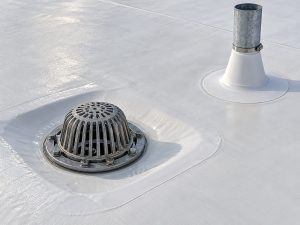
Commercial roofs generally include pipes, vents, curbs, HVAC equipment, drains, and other components that pass through or connect to the roof assembly. These details can become water-entry points if they are not properly flashed and sealed.
During installation or repair, each affected penetration should receive the flashing, seals, and reinforcement required by the selected system.
Prefabricated TPO boots may be used for suitable pipe penetrations, while irregular shapes can require approved field-formed flashing or another specified detail.
The membrane and flashing must be properly joined and terminated, without gaps or loose edges that allow water beneath the system.
Penetrations should be planned before installation because their locations can affect membrane layout, flashing details, and drainage design.
How Does Drainage Work on a TPO Roof?
Water needs a clear path off a low-slope roof. A TPO membrane is not a substitute for proper drainage. Drains, scuppers, gutters, and tapered insulation may all be part of the design. Where drains are used, the membrane must be integrated with the drain assembly according to the roofing system requirements.
Tapered insulation can help direct water toward drains. Its design depends on the roof slope, drainage layout, and project requirements.
Drainage outlets should remain unobstructed during installation and receive ongoing maintenance afterward, particularly around seasonal debris and winter conditions. Owners should arrange safe professional access for rooftop cleaning and inspection.
Poor drainage can leave water on the roof and create problems that cannot be solved by selecting a different membrane alone.
What Should Be Checked Before TPO Installation?
Before installation, the contractor should understand the condition of the supporting assembly. The deck must be suitable for the proposed system. Damage, wet materials, surface irregularities, and other conditions that could affect performance need to be addressed.
The substrate must be clean and properly prepared. Anything that could interfere with adhesion, mechanical attachment, or seam welding should be resolved before the affected work proceeds.
This preparation may be overlooked because it happens beneath the finished membrane. But it directly affects the roof’s performance.
Why Does TPO Installation Quality Matter?
TPO is often discussed for characteristics such as its reflective surface and resistance to weather exposure. Those characteristics can matter, but they do not replace good installation.
A high-quality membrane cannot compensate for a poorly welded seam. A good drainage design cannot work if outlets are blocked. A properly selected TPO sheet can still develop problems if the substrate is unsuitable or penetrations are poorly flashed.
That is why commercial roofing should be evaluated as a complete system.
For another North Dakota market, property owners can also learn more about TPO Roofing in Minot, ND.
What Should Commercial Property Owners Ask a TPO Roofing Contractor?
Before approving a project, ask how the proposed roof will be installed.
Questions can include:
- Which TPO membrane and system are being proposed?
- How will the membrane be attached?
- How will seams be welded and checked?
- How will pipes and other penetrations be flashed?
- Where will roof drains and scuppers be located?
- How will water be directed toward the drainage points?
- What preparation is required before installation?
- Which manufacturer requirements will the installation follow?
These questions help property owners understand what they are buying instead of judging a proposal only by the membrane name or material price.
Is TPO Roofing a Good Choice for a Commercial Building?
It can be, but the right system depends on the building. TPO is common in low-slope commercial roofing, and it should be selected in the context of the complete assembly.
An assessment of the deck, existing materials, moisture condition, insulation, wind exposure, penetrations, and drainage helps determine whether TPO is appropriate for a commercial building in Dickinson.
Contact Hi-Line Commercial Roofing at (701) 621-0511 to discuss your commercial roofing needs in Dickinson, ND.
FAQ
1. Where can I buy TPO roofing?
TPO roofing materials are generally available through roofing-material distributors. A commercial roofing contractor can help identify the membrane and compatible system components specified for the project.
2. What are the disadvantages of TPO roofing?
TPO can be punctured by sharp objects or damaged by unsuitable materials and exposures. Its performance also depends on proper attachment, seam welding, flashing, substrate preparation, and drainage. Product selection and installation should account for the building’s conditions.
3. What is the cost of TPO roofing per roll?
Roll prices vary by membrane thickness, dimensions, brand, supplier, and location. The full project cost also includes preparation, insulation, attachment, flashing, labor, and other required components.
4. Can TPO go directly on plywood?
Some approved assemblies allow TPO over a suitable plywood substrate, but it should not simply be placed over any plywood surface. Deck preparation, separation layers, insulation, cover board, and attachment must follow the selected system’s requirements.
5. What is the lifespan of TPO roofs?
A properly installed and maintained TPO roof can provide many years of service, but no single lifespan applies to every system. Product selection, installation, weather exposure, drainage, and maintenance all affect longevity.
6. Is TPO or PVC better for a commercial roof?
Neither is better for every building. Both are single-ply membranes. The right choice depends on the roof assembly, budget, expected exposure, and building use, including any rooftop grease or chemical discharge. A project-specific evaluation helps establish the appropriate system.