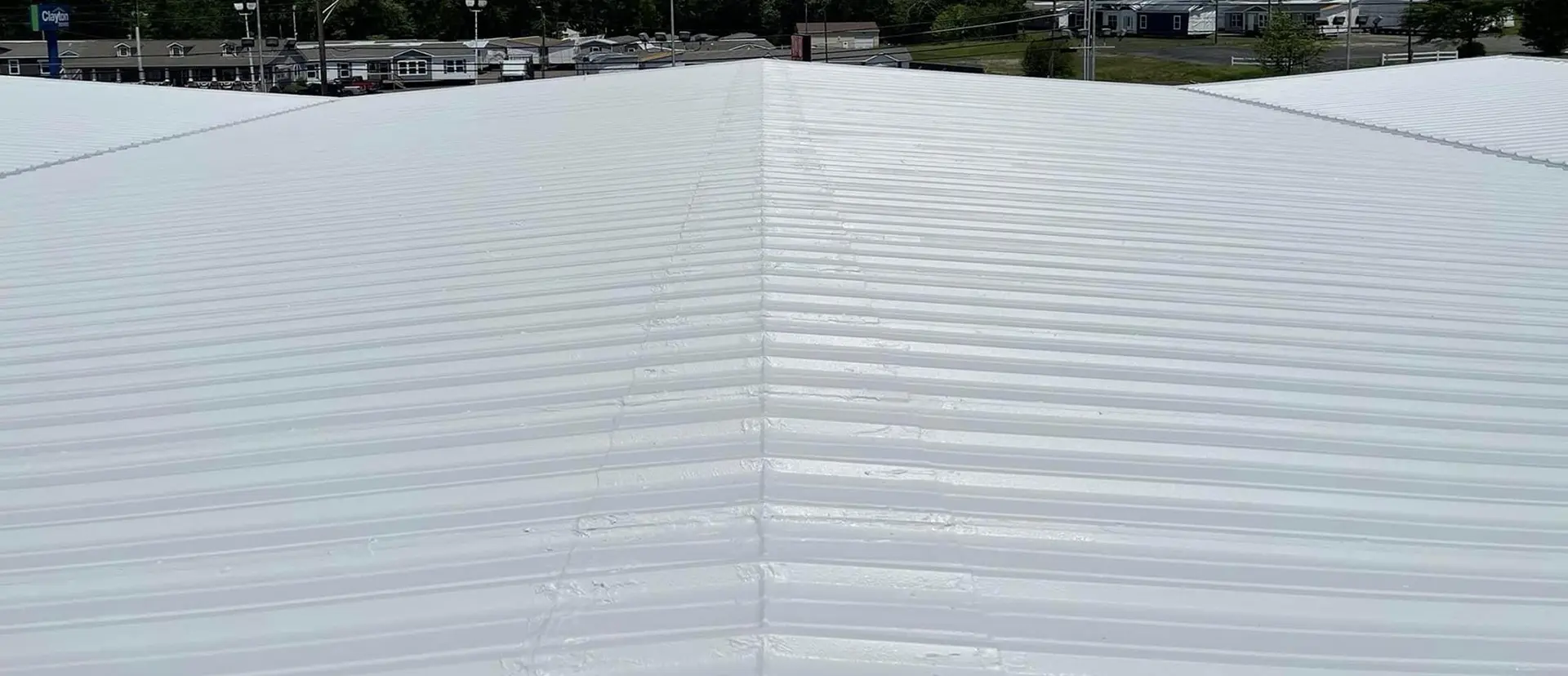

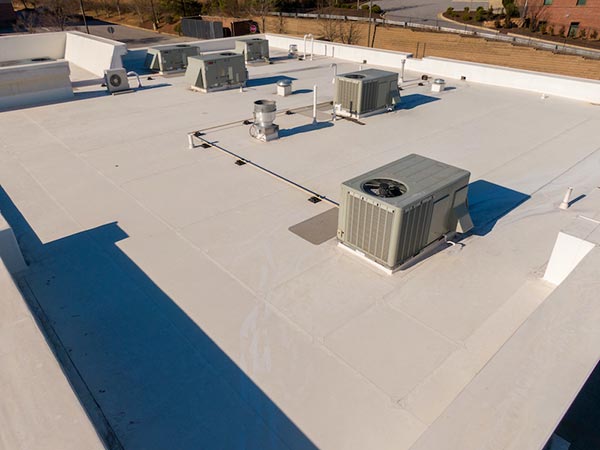
Commercial buildings in Minot, ND must withstand some of the most demanding weather conditions in the region. Heavy snowfall, freeze-thaw cycles, spring snowmelt, and strong summer storms all challenge a roof’s ability to keep water out of the building. TPO roofing provides dependable waterproofing by combining heat-welded seams, durable membrane construction, and reliable drainage performance for commercial properties.
Call Hi-Line Commercial Roofing at (701) 621-0511 for TPO roofing in Minot, ND.
TPO Roofing Creates a Strong Waterproof Barrier
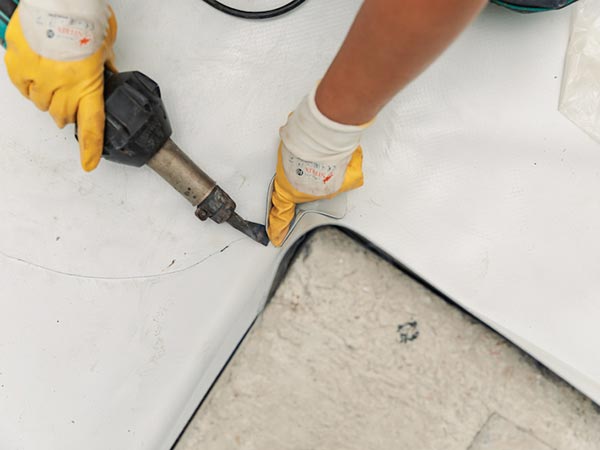
Thermoplastic polyolefin, commonly known as TPO roofing, has become one of the most popular commercial roofing systems because of its ability to create a continuous waterproof surface. Unlike roofing systems that depend on adhesives to join sections together, TPO membranes are connected using hot-air welding. This process fuses overlapping sheets into one continuous seam that becomes part of the membrane itself.
The welded seams are one of the defining features of TPO roofing. When installed correctly, these seams are exceptionally durable and help prevent water from entering the roofing system. Because they do not rely on adhesives that can weaken over time, welded seams continue to perform through years of changing temperatures and weather exposure.
Commercial property owners benefit from this dependable waterproofing because the roof’s most vulnerable areas, the seams, are designed to resist moisture infiltration even during demanding weather conditions.
How TPO Roofing Performs in Minot’s Climate
Minot experiences long winters with significant snowfall followed by rapid spring snowmelt. While the roof’s structure supports the weight of accumulated snow, the roofing membrane plays an essential role once melting begins.
Large volumes of water can move across the roof during the spring thaw. Properly welded seams, secure flashing around roof penetrations, and effective drainage systems all work together to move water safely toward drains instead of allowing it to enter the building.
Freeze-thaw cycles also test every commercial roofing system. As temperatures repeatedly rise above and fall below freezing, roofing materials expand and contract. TPO membranes remain flexible enough to accommodate this movement while maintaining the integrity of the welded seams.
Summer thunderstorms bring another challenge. Heavy rainfall and wind-driven moisture place additional demands on flashing details around rooftop equipment, parapet walls, and roof edges. A properly installed TPO roofing system is designed to protect these vulnerable areas throughout changing weather conditions.
Maintaining Waterproofing Throughout the Roof’s Service Life
A quality commercial roof continues to perform when professional installation is supported by routine maintenance. Regular roof inspections allow small issues to be identified before they develop into larger water intrusion problems.
Seam inspections are an important part of preventive maintenance. Although heat-welded seams are highly durable, periodic evaluations help verify that rooftop traffic, severe weather, or building movement have not affected their performance.
Drainage systems also deserve regular attention. Leaves, debris, and other obstructions can slow water flow and create ponding conditions after storms or snowmelt. Standing water adds stress to roofing materials over time, making routine drain cleaning an important part of roof maintenance.
The thickness of the TPO membrane also contributes to long-term durability. Heavier membrane specifications generally provide greater resistance to punctures, weathering, and ultraviolet exposure, allowing the roofing system to continue protecting the building for many years.
Protect Your Building with TPO Roofing
Commercial property owners in Minot need roofing systems that perform reliably through every season. TPO roofing combines welded seams, flexible membrane construction, and dependable waterproofing to help commercial buildings withstand North Dakota’s snow, rain, and temperature changes.
When paired with proper drainage, professional installation, and routine maintenance, TPO roofing offers long-lasting protection that supports the performance of retail buildings, healthcare facilities, industrial properties, government buildings, and many other commercial structures throughout the region.
For TPO roofing in Minot, ND, contact Hi-Line Commercial Roofing at (701) 621-0511 today.
FAQ
How do TPO roof seams keep water out, and how durable are they?
TPO seams are created by heat welding overlapping membrane panels together. This process forms a bond that becomes part of the roofing membrane rather than relying on adhesives. Properly welded seams are highly durable and perform well through repeated freeze-thaw cycles.
How does TPO roofing handle heavy snow loads and spring snowmelt in North Dakota?
The building’s structural system supports snow loads, while the TPO membrane provides waterproof protection as snow melts. Effective drainage, quality flashing, and welded seams help direct melting water safely off the roof without allowing leaks to develop.
What is the expected lifespan of a TPO roof?
A professionally installed and properly maintained TPO roof commonly lasts between 20 and 30 years. Installation quality, membrane thickness, routine inspections, and good drainage all contribute to achieving its full service life.