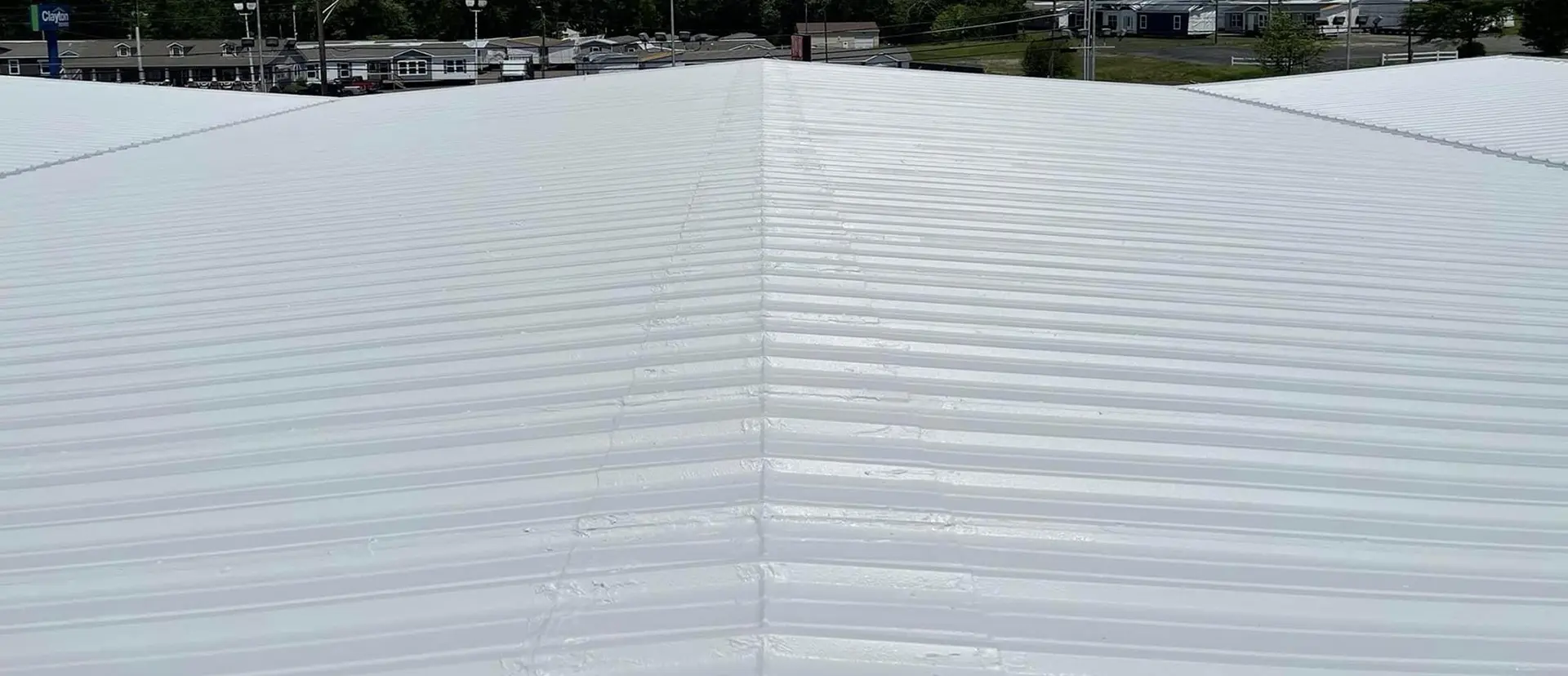

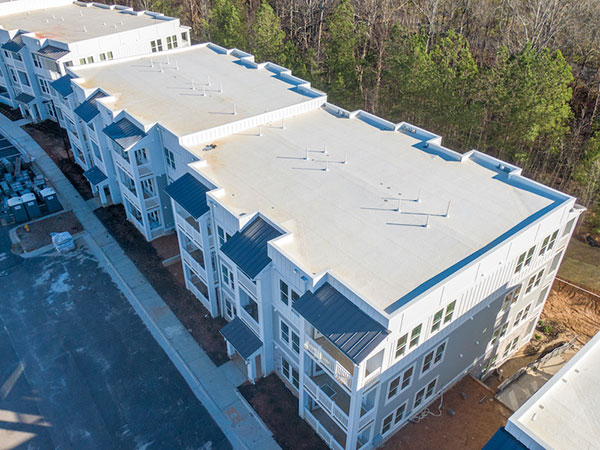
Commercial buildings in Minot, ND, rely on roofing systems that can handle demanding seasonal conditions while protecting the structure below. For property owners planning a new roof or replacing an aging system, understanding the installation process makes it easier to evaluate options and prepare for the project. Flat roof installation involves selecting an appropriate roofing system, preparing the substrate, installing insulation and roofing materials, and verifying the finished work. Call Hi-Line Commercial Roofing at (701) 621‑0511 for flat roof installation in Minot, ND.
Choosing a Flat Roof System
Several roofing systems are available for commercial flat and low-slope roofs. Single-ply membranes are among the most common choices and include TPO, PVC, and EPDM. TPO and PVC are thermoplastic membranes with heat-welded seams. Both can provide reflective roofing surfaces, while PVC also offers resistance to certain chemicals and grease that may benefit some industrial and food service properties.
EPDM is a synthetic rubber membrane with a long history of commercial use, including in cold climates. Its seams are joined using adhesives rather than heat welding. Property owners may consider factors such as building use, drainage, insulation needs, rooftop conditions, and maintenance preferences when comparing these systems.
Spray polyurethane foam, commonly called SPF, is another option. It creates a seamless roofing and insulating surface and can be particularly useful when improved insulation is a major project goal. The appropriate system depends on the needs of the individual building.
What Flat Roof Installation Involves
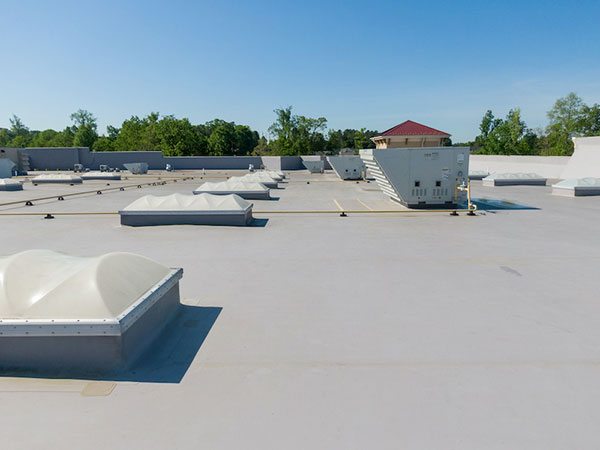
A commercial installation begins with an assessment of the existing roof and substrate. Contractors evaluate the roof deck, insulation, moisture conditions, and existing materials. This assessment helps determine whether the old roofing system needs complete removal or is suitable for a roof recover that retains serviceable components of the existing assembly.
Insulation is typically installed over the deck before the roofing membrane. Property owners may need to make decisions about insulation thickness, R-value, and whether tapered insulation is needed to help direct water toward drains.
The membrane is then installed using a method appropriate for the selected system and building. Depending on project requirements, it may be mechanically fastened, fully adhered, or otherwise secured according to the roofing system specifications and applicable wind-uplift requirements.
Minot’s open terrain makes wind resistance an important consideration, particularly for mechanically fastened membranes. Installation scheduling also matters because roofing work requires suitable weather conditions. Planning early helps property owners coordinate the project around seasonal constraints.
Details That Determine Installation Quality
Much of a flat roof’s performance depends on details that may not be immediately visible to a property owner. Seams, penetrations, flashing, and drainage areas all require careful attention.
For thermoplastic systems such as TPO and PVC, heat-welded seams should be inspected and tested during installation. Owners can ask contractors how seam testing is performed and whether the results are documented. Pipes, HVAC curbs, vents, and drains also require proper flashing to preserve the waterproof roofing envelope.
Drainage should be evaluated before the project is considered complete. Water should flow toward designated drainage points without collecting in low spots.
Weather and moisture conditions can also affect installation. In Minot, roof surfaces affected by snowmelt should be allowed to dry before roofing materials are installed. Trapping moisture within the assembly can compromise the finished system.
Completing a Flat Roof Installation Project
A quality installation should conclude with more than simply finishing the roofing surface. The contractor should inspect seams, flashing, drainage areas, penetrations, and other details to confirm that the completed work meets project requirements.
Property owners should expect a final walkthrough and an opportunity to discuss any remaining work. The contractor should provide warranty documentation and explain applicable registration and maintenance requirements. Understanding these final steps helps owners confirm that the new roofing system is ready for long-term service.
For flat roof installation in Minot, ND, contact Hi-Line Commercial Roofing at (701) 621‑0511 today.
FAQ
What flat roof systems are available for commercial buildings?
Common options include TPO, PVC, and EPDM single-ply membranes along with spray polyurethane foam. Building use, insulation requirements, drainage, chemical or grease exposure, and long-term maintenance preferences can influence which system is appropriate.
What happens during a commercial flat roof installation?
The process generally includes assessing the existing substrate, determining whether a tear-off or roof recover is appropriate, installing insulation, applying the selected roofing system, completing flashing and penetration details, and conducting a final inspection.
How can I tell whether my new flat roof was installed correctly?
Ask the contractor how seam testing was performed, whether flashing is complete around penetrations, and how drainage was verified. Review the completed work during the final walkthrough and confirm that appropriate warranty documentation has been provided.