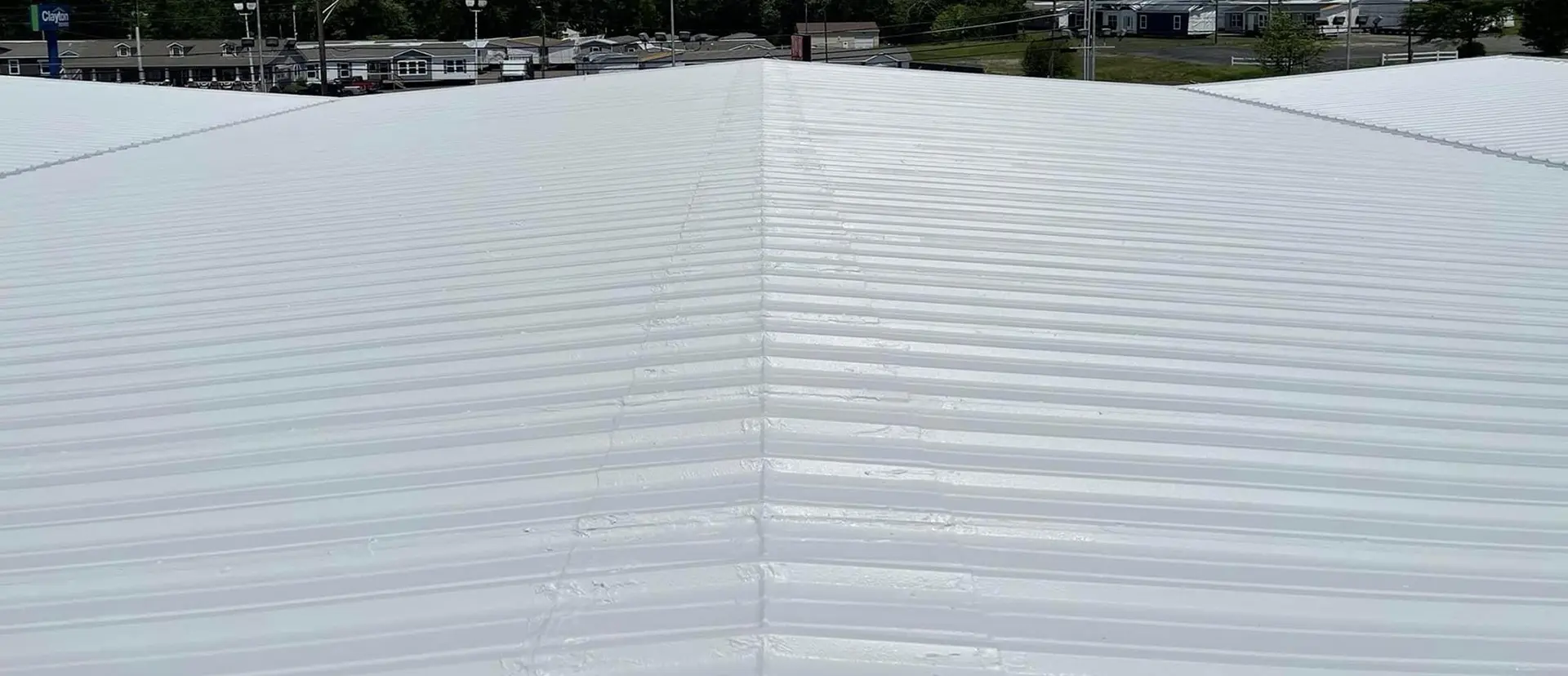

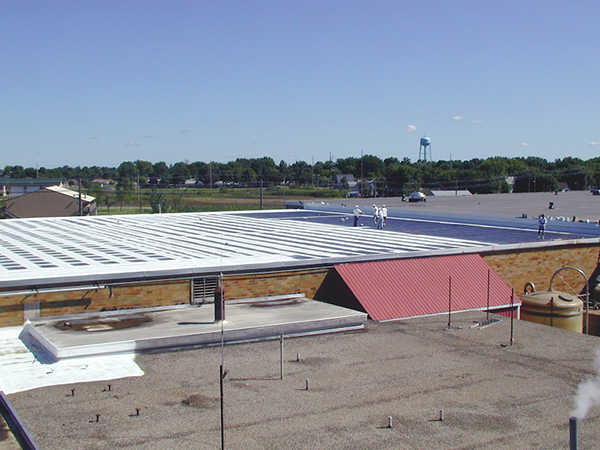
Commercial flat roofs in Minot, ND face long summer days, winter weather, snowmelt, and repeated temperature changes that gradually age roofing membranes. Building owners who protect a roof while its underlying materials remain sound can extend its useful service life considerably. Roof coating creates a protective layer over an existing commercial membrane, slowing common forms of deterioration and adding years of weather resistant performance.
Call Hi-Line Commercial Roofing at (701) 621-0511 for roof coating in Minot, ND.
How Roof Coating Extends Service Life
A fluid applied roof coating covers a prepared flat or low slope membrane with a continuous protective surface. Instead of leaving the original membrane directly exposed to weather, the coating becomes the surface that receives much of the daily environmental stress.
Properly applied coating systems can carry manufacturer warranties of 10 to 20 years, depending on the coating material and application thickness. Acrylic systems commonly fall toward the lower portion of that range, while silicone systems can provide longer warranty periods.
The greatest longevity advantage comes from the ability to renew qualifying systems. When the initial warranty period approaches its end, the surface can be evaluated, prepared, and recoated. A successful renewal creates another period of protected service without removing the sound membrane underneath.
Following this cycle can potentially extend a commercial roof’s useful life by 20 to 30 years beyond what the original uncoated membrane might have provided on its own.
Protecting Roofs from Minot’s Aging Forces
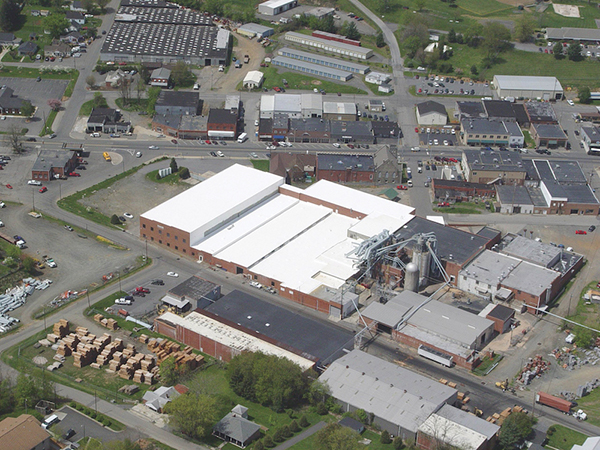
Minot’s climate exposes commercial roofs to several conditions that contribute to membrane deterioration. Ultraviolet radiation during long summer days can gradually oxidize exposed roofing materials, reducing flexibility and contributing to surface cracking and brittleness.
Reflective coatings help reduce this exposure by deflecting a significant portion of the solar load before it reaches the underlying membrane. By protecting the original surface, the coating slows one of the processes responsible for long term roof aging.
Water creates another challenge. Heavy snow accumulation followed by melting can leave sustained moisture on flat roofs, especially where drainage is imperfect. Silicone coatings provide strong resistance to ponding water, while acrylic coatings are generally better suited to roofs with effective drainage.
Temperature changes also cause roofing materials to expand and contract. Elastomeric coatings, which remain flexible after application, can move with the membrane and help protect seams and other vulnerable areas through these cycles.
Timing Roof Coating for Maximum Longevity
The condition of the existing roof determines how much service life a coating can preserve. The best opportunity generally occurs while the membrane remains structurally sound but has started showing early signs of surface aging.
Mild oxidation, minor surface crazing, or aging flashing sealants can indicate that the membrane is entering a stage where additional protection may be beneficial. At this point, the roof may still have substantial structural life available for the coating to preserve.
Waiting until widespread moisture infiltration, major seam failure, or significant membrane shrinkage develops can reduce the areas suitable for coating. Extensive deterioration may require additional repairs or make another roofing approach more appropriate.
A professional inspection can establish where the roof is in its aging cycle and whether the substrate, meaning the existing surface beneath the proposed coating, remains suitable.
Matching the Coating to Roof Conditions
Different coating materials provide characteristics suited to different commercial roofs. Acrylic coatings are water based and reflective, making them appropriate for many well drained roofing systems. Silicone performs particularly well where resistance to ponding water and continued flexibility are priorities.
Polyurethane coatings provide greater abrasion resistance, which can be useful on commercial roofs that receive regular foot traffic for mechanical equipment maintenance.
Selecting a coating based on actual roof conditions supports longevity because the protective surface must withstand the specific stresses affecting the building. Drainage, traffic, existing membrane condition, and Minot’s weather exposure should all inform that decision.
Extend Commercial Roof Life in Minot
A well-timed coating can slow membrane aging while creating a renewable path for continued protection. Hi-Line Commercial Roofing helps commercial building owners evaluate existing roofs and determine whether a coating system is appropriate for extending service life.
For roof coating in Minot, ND contact Hi-Line Commercial Roofing at (701) 621-0511 today.
FAQ
How many years can a commercial roof coating add?
Properly applied systems commonly carry warranties ranging from 10 to 20 years. Qualifying roofs can later be recoated, potentially creating multiple cycles of additional protected service life.
Does a roof coating protect against freeze and thaw conditions?
A flexible coating seals prepared surfaces against moisture while moving with the roofing membrane as temperatures change. These characteristics help protect areas vulnerable to repeated freezing and thawing.
When should a commercial roof be evaluated for coating?
Evaluation is useful when the membrane shows early surface aging but remains structurally sound. An inspection can identify moisture, seam conditions, and other factors that determine whether the roof remains a suitable candidate.