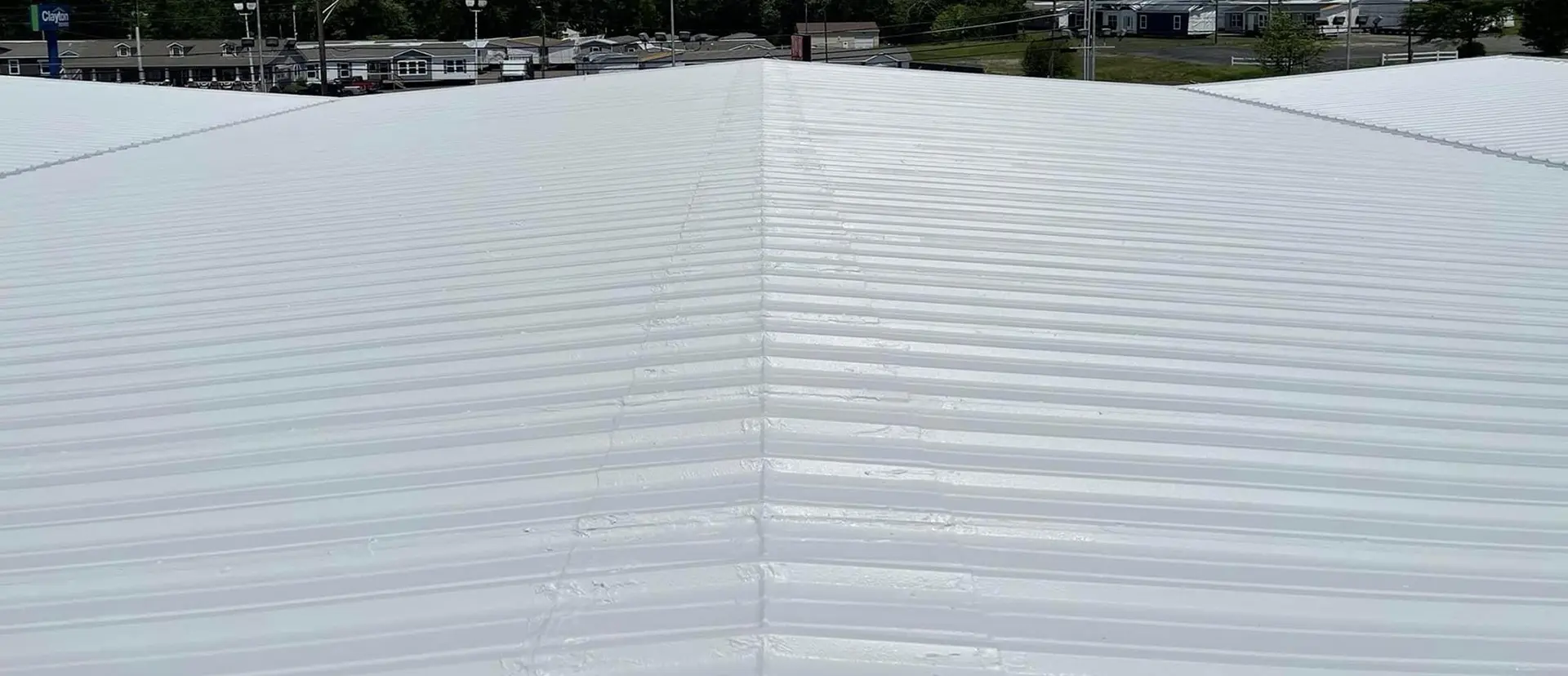

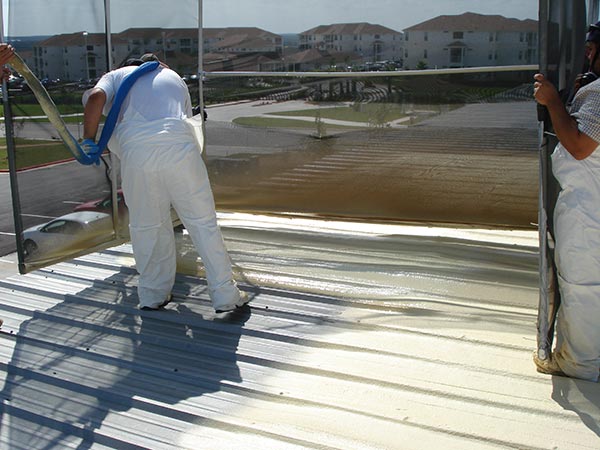
Commercial buildings in Williston, ND are exposed to demanding weather throughout the year. Heavy snowfall, rapid spring snowmelt, and repeated freeze-thaw cycles place constant stress on flat roofing systems, particularly around seams, flashing, and penetrations. Spray foam roofing creates a seamless, fully adhered surface that helps eliminate many of the common weak points found in traditional commercial roofs.
Hi-Line Commercial Roofing installs spray foam roof systems in Williston, ND. Call (701) 621-0511 to learn whether spray foam roofing is the right solution for your commercial property.
A professionally installed spray foam roof can improve energy efficiency, provide outstanding weather protection, and extend the life of your commercial roofing system.
Spray Foam Roofing Creates a Seamless Waterproof Barrier
Spray polyurethane foam, commonly called SPF, is applied as a liquid that rapidly expands into a rigid, closed cell foam across the roof surface. Because the material conforms to every contour of the roof, it creates a seamless membrane without joints, laps, or exposed fasteners that commonly allow water to enter other roofing systems.
This seamless application is particularly valuable on commercial roofs with multiple penetrations such as HVAC units, vents, pipes, and equipment curbs. Instead of relying on numerous flashing components to keep water out, the expanding foam surrounds these features and creates a continuous waterproof seal.
After the foam cures, a protective coating is applied over the surface. This coating shields the foam from ultraviolet exposure while serving as the primary weather barrier against rain, snow, and standing water.
Why Spray Foam Roofing Performs Well in Williston’s Climate
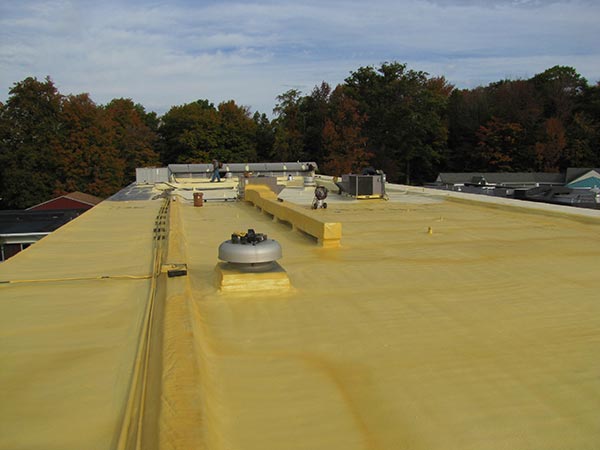
Williston experiences long winters with significant snowfall followed by periods of rapid snowmelt. During these seasonal transitions, roofs often experience repeated freeze thaw cycles that place continual stress on seams and flashing found in conventional roofing systems.
Because spray foam roof does not rely on mechanical joints or adhesive bonded seams across the field of the roof, there are fewer opportunities for water to penetrate the roofing system. This design helps reduce the likelihood of leaks developing during periods of melting snow or heavy spring precipitation.
The closed cell structure of cured spray foam also provides additional protection if the roof surface experiences localized damage. Water does not easily migrate through the foam, helping limit moisture intrusion while repairs are scheduled.
Long Term Waterproofing Depends on Proper Maintenance
Although spray foam roofing provides excellent waterproof performance, routine maintenance remains essential for protecting the system over the long term. The protective topcoat gradually weathers after years of exposure to sunlight and changing temperatures, making periodic inspections an important part of preserving its performance.
During maintenance visits, roofing professionals inspect the protective coating, verify that drains remain clear, and examine roof penetrations for signs of wear or damage. Addressing minor coating issues early helps preserve the roof’s waterproof barrier, reduce the risk of larger problems, and extend its service life.
One of the greatest advantages of spray foam roof is that the protective coating can often be renewed at the end of its warranty period. Reapplying the coating restores weather protection without removing the underlying foam, allowing building owners to extend the roof’s service life and maintain its waterproof performance for many additional years.
Installation Timing Matters
While cured spray foam performs exceptionally well during North Dakota winters, installation requires favorable weather conditions. The foam must be applied when temperatures are above freezing and the roof surface is dry to allow proper expansion and adhesion.
For this reason, most spray foam roof projects are completed from late spring through early fall. Planning ahead allows commercial property owners to complete installation before winter weather arrives, providing dependable protection for the seasons ahead.
Scheduling work during appropriate weather also helps maximize the quality of the finished roofing system and supports long term performance.
Protect Your Building with a Seamless Roofing System
Spray foam roofing offers commercial property owners a seamless waterproofing solution that helps eliminate many of the leak points found in traditional flat roofing systems. Its closed-cell construction, continuous application, and renewable protective coating make it an excellent choice for buildings exposed to Williston’s demanding weather conditions.
Hi-Line Commercial Roofing installs spray foam roofing systems in Williston, ND. Call (701) 621-0511 today to determine whether spray foam roofing is the right solution for your commercial property.
A professionally installed spray foam roof can improve energy efficiency, extend roof life, and provide dependable protection against North Dakota’s challenging climate.
FAQ
How does spray foam roofing prevent water intrusion better than many traditional flat roofs?
It is applied as a continuous layer that expands around roof penetrations and irregular surfaces. Because there are no field seams or exposed fasteners, water has fewer pathways to enter the roofing system.
How does spray foam roofing handle standing water?
The cured foam is made of closed cell material that resists water absorption, while the protective topcoat provides the primary waterproof barrier. Proper maintenance of the coating helps preserve long term performance in areas where water may remain after storms or snowmelt.
Can spray foam roofing withstand North Dakota winters?
Yes. Once installed and fully cured, spray foam roofing maintains its structural and insulating properties during freezing temperatures. Installation, however, must take place during suitable weather conditions when temperatures are above freezing.