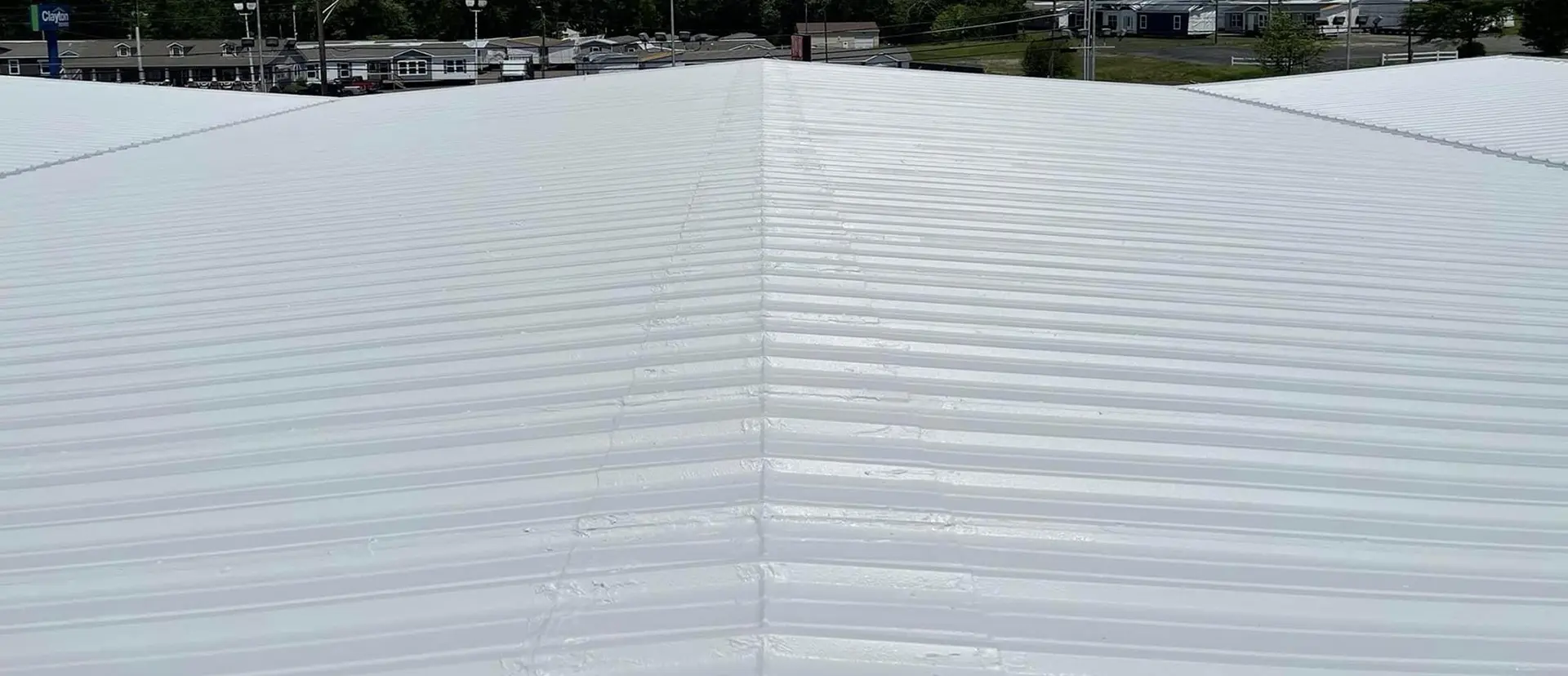

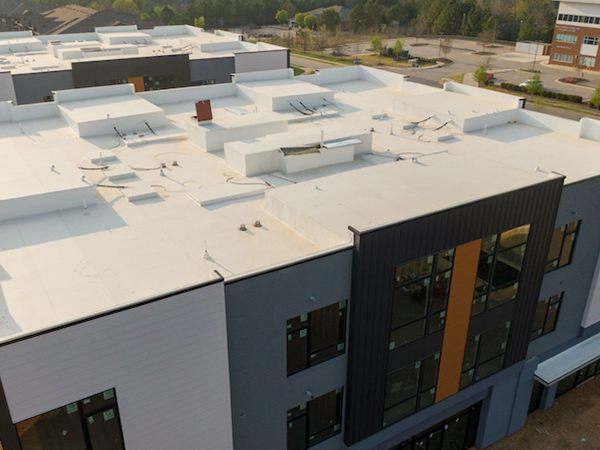
Commercial buildings in Minot, ND have different roofing demands depending on their use, drainage, rooftop activity, and exposure. TPO, PVC, and EPDM are three common single-ply membranes, but their seam construction, chemical resistance, energy characteristics, and cold-weather performance differ. Single-ply roofers evaluate these building-specific conditions to determine which membrane system is appropriate rather than applying the same solution to every property.
Call Hi-Line Commercial Roofing at (701) 621-0511 for single-ply roofers in Minot, ND.
Compare Seam Systems
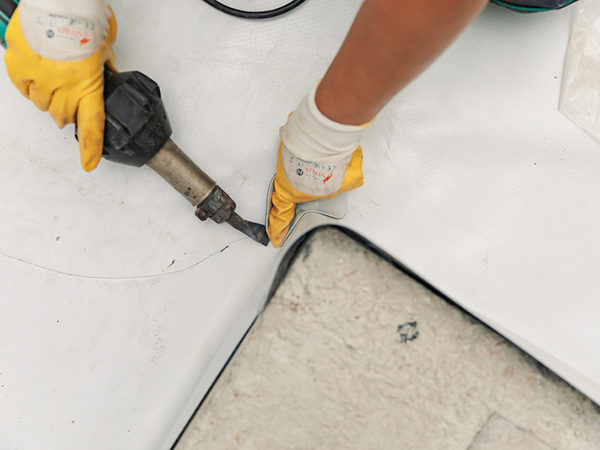
TPO, or thermoplastic polyolefin, and PVC, or polyvinyl chloride, are thermoplastic membranes. Their seams are joined using heat welding, which bonds adjoining membrane sections together. This creates a different seam structure from systems that rely primarily on adhesives.
EPDM, or ethylene propylene diene monomer, is a synthetic rubber membrane. Its seams are generally joined with adhesive or tape. EPDM has a long history of use in cold climates because the rubber remains flexible at low temperatures.
The seam distinction deserves attention in Minot because repeated freeze-thaw cycles place stress on roofing components. Heat-welded TPO and PVC seams avoid field joints that rely primarily on adhesive or tape. EPDM performs well in cold climates, but its bonded seams benefit from careful inspection and maintenance over time.
Match Membranes to Building Conditions
Roof selection should also account for what happens inside and on top of a commercial building. PVC provides strong resistance to grease and many chemicals, making it worth considering for restaurants, food-related facilities, and certain industrial properties.
TPO is commonly selected for a broad range of commercial buildings. It is typically white or light-colored, and its reflective surface can reduce solar heat absorption during warmer weather. Its heat-welded seams and widespread commercial use make it suitable for many retail, warehouse, and similar applications.
EPDM is most commonly black, although other options exist. Its rubber composition provides flexibility and a proven cold-weather record. Each system therefore brings a different combination of characteristics, which is why building use matters during selection.
This distinction is relevant across Minot’s mix of retail centers, healthcare and government facilities, warehouses, and light industrial properties. A restaurant tenant may create different rooftop demands than a warehouse with limited chemical exposure.
Energy Performance and Cold Weather
All three membrane types can perform successfully in North Dakota when they are correctly specified and installed. The differences become clearer when energy goals and specific building conditions are considered.
Light-colored TPO and PVC surfaces reflect more solar energy than a traditional black EPDM membrane. This can reduce rooftop heat absorption during sunny periods. However, Minot has a heating-dominated climate, so membrane color represents only one part of overall energy performance.
Insulation beneath the membrane has a major role in controlling heat transfer through the roof. Attachment method, insulation thickness, air movement, roof configuration, and existing conditions should therefore be considered alongside membrane selection.
Cold-weather flexibility is also important. EPDM’s rubber composition remains pliable at temperatures well below freezing. Properly installed TPO and PVC can also handle low temperatures, while their welded seams provide a useful advantage during repeated seasonal temperature changes.
What Qualified Roofers Evaluate
Choosing a roofing contractor involves more than confirming that the company installs single-ply membranes. Experience with the specific system being considered matters because installation requirements vary among membrane types.
For thermoplastic roofs, quality control during seam welding is particularly important. A contractor should also evaluate drainage, the existing substrate, rooftop foot traffic, chemical exposure, and other building conditions before recommending a membrane.
Building owners can also ask about experience on similar commercial properties and familiarity with installation requirements that affect warranty eligibility. The goal is to match the roofing system and installation method to the actual property rather than choosing solely on one material characteristic.
Select a System for Your Building
TPO, PVC, and EPDM can all provide dependable commercial roofing when matched with suitable building conditions. Understanding their differences gives property owners a stronger foundation for discussing membrane selection, installation, and long-term performance.
For single-ply roofers in Minot, ND, contact Hi-Line Commercial Roofing at (701) 621-0511 today.
FAQ
Which single-ply membrane requires the most seam maintenance?
EPDM seams generally require closer long-term attention because they use adhesive or tape rather than heat welding. Routine inspections can identify changes in adhesion before they contribute to water entry.
Is PVC roofing only appropriate for restaurants?
No. PVC can be used on many commercial properties. Its resistance to grease and chemicals makes it particularly useful for restaurants, food-processing operations, and facilities where rooftop contaminants are a concern.
What should I ask a single-ply roofer before selecting a system?
Ask about experience with the proposed membrane, seam quality-control procedures, similar local projects, installation requirements, and how building-specific conditions influenced the recommendation.